
Tanvi Patri Wins 2026 Badminton Asia U17 Title in Chengdu: India Keeps the Crown, but the Data Still Stops Short
**Câu trả lời cốt lõi**: Tanvi Patri (Ấn Độ), hạt giống số 2, vô địch đơn nữ U17 tại Badminton Asia Junior Championships 2026 ở Thành Đô, thắng Shaina Manimuthu 11-15, 15-10, 15-12 trong trận chung kết toàn Ấn Độ. **Dữ kiện chính**: - Chung kết toàn Ấn Độ: Patri (hạt giống số 2) thắng Manimuthu (hạt giống số 6) sau ba ván. - Patri thắng cả ba ván quyết định trong giải; chênh lệch điểm ròng +34 (187-153). - Ba trong bốn đối thủ của Patri là tay vợt Trung Quốc; giải diễn ra tại Thành Đô, Trung Quốc. - Giải dùng thể thức 15 điểm mỗi ván, khác hệ thống 21 điểm cấp chuyên nghiệp. - Diksha Sudhakar vô địch nội dung U17 nữ năm 2025; Ấn Độ giữ ngôi hai năm liên tiếp. **Nguồn**: Bản tin kết quả Badminton Asia Junior Championships 2026 (Thành Đô). Các số liệu chưa được kiểm chứng độc lập bởi tổ chức thứ ba. **Hỏi đáp liên quan**: - Hỏi: Danh hiệu U17 châu Á có tạo điểm xếp hạng BWF không? Đáp: Không — giải nằm ngoài thang điểm BWF World Tour và không thuộc lộ trình vòng loại Olympic. - Hỏi: Ai vô địch U17 nữ châu Á 2025? Đáp: Diksha Sudhakar (Ấn Độ). - Hỏi: Tanvi Patri bao nhiêu tuổi? Đáp: Nguồn hiện có không cung cấp ngày sinh; chỉ xác nhận cô thuộc nhóm tuổi U17 mùa 2026.
The opening game of the U17 girls' singles final ended 11-15. Tanvi Patri, the second seed, had just let Shaina Manimuthu — the sixth seed, and her own compatriot — take the lead inside the arena in Chengdu. Less than an hour later she walked off with back-to-back wins at 15-10 and 15-12, closing out the Badminton Asia U17 and U15 Junior Championships 2026 with a gold medal.
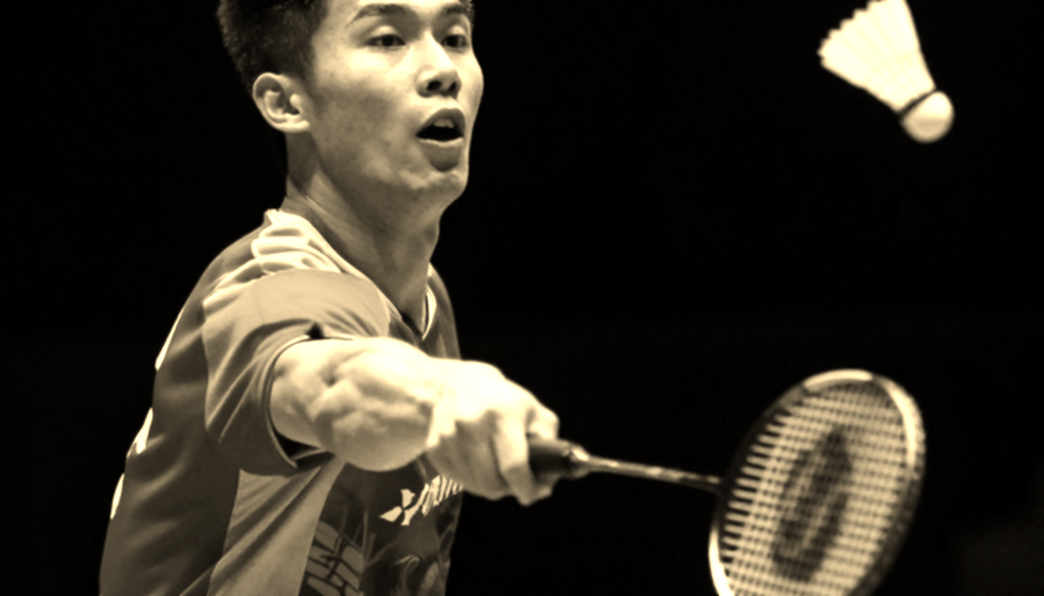
The result itself is not the interesting part. An all-Indian final at continental U17 level means two women's players from the same country fought through two separate halves of the draw to meet in the last match. Who won matters less than the fact that both were there.
Context: where this tournament sits in the system
The event was held in Chengdu, China, organised by Badminton Asia. It is a continental age-group competition for U17 and U15 players, sitting entirely outside the BWF World Tour tier ladder — not Super 1000, 750, 500, 300 or 100 — and below the BWF World Junior Championships in prestige. That structure matters because it dictates how the result should be read: a U17 Asian title generates no meaningful senior ranking points and sits nowhere on the Olympic qualification path.
In 2026, Diksha Sudhakar won this event. In 2026, Tanvi Patri repeated it. For two consecutive years India has produced a U17 girl capable of topping the continent, and this year it produced two finalists.
The scorelines that appear throughout her run — 18-16, 15-13, 15-12, 15-11 — indicate the tournament used a 15-point rally-scoring format per game, distinct from the 21-point senior system. This should be checked against Badminton Asia's official technical regulations before being treated as settled fact.
On scope, the tournament is restricted to Asian member associations. European and Pan-American U17 players are by definition absent. A "continental champion" label therefore cannot be read as "the world's best U17 player".
Analysis: what the data says, and where it stops
Patri's path: seeded second, she received a first-round bye. Then came four wins, three of which went to a deciding game. She won all three of those deciders, by margins of 2, 4 and 3 points respectively. In the final she lost the opening game 11-15 and then won the next two.
This is a repeating pattern, not a single escape. The only robust technical signal the scoreboard leaves behind is an ability to close deciding games under compressed pressure.
In the other direction, she dropped at least one game in most of her matches, including a 12-15 loss to Zhou Jing Li and an 11-15 opening-game loss in the final. The profile fits a player with unstable starts but late-match composure, rather than a wire-to-wire dominator.
Based on my own experience following junior matches through online scoreboards, three deciders out of four played matches is a marker of incomplete consistency. Two straight-game wins at 15-9, 15-12 and 15-8, 15-8 show that when she finds rhythm she closes cleanly. But the gap between her ceiling and her floor within the same week remains wide.
Three of her four opponents were Chinese, and the entire event took place on Chinese soil. Beating host-nation juniors in Chengdu is a mild but genuine quality marker. It says nothing about how she handles non-Asian styles.
Aggregated: 187 points won, 153 conceded, a net swing of +34 across all games played. Data is the only thing that does not do diplomacy — and the data here is not thick enough to support any claim beyond the boundaries of a single tournament.
One further note on seeding mechanics. In age-group events, seeding is assigned largely on prior regional results and national association nomination. A second seed is a weak proxy for absolute level, not an independent measurement.
There is something the scoreboard cannot provide: no description of shot patterns, movement, tempo or shot selection. No height, physique or injury history. No date of birth. Classifying her playing style — counter-attacking defence or proactive attack — is therefore impossible from the available source.
Contrarian angle: this title is not evidence
In a 15-point format, two points at 12-12 carry near-decisive weight for the entire game. The premium on endurance and rally construction — the things that define the 21-point senior game — is heavily compressed. Any inference of "senior-ready" drawn from this title should be discounted hard.
The deeper issue sits at system level. When associations optimise juniors for short-format play, they risk under-preparing them for senior tour conditions. That is an institutional concern, not a judgement on the individual athlete.
The popular framing — "immense mental strength" — is an editorial inference from a single scoreline. Journalists routinely attach that label to anyone who wins a third game. Losing an opener and then turning the match around could be a warm-up lag, or a deliberate feel-out plan. A scoreboard cannot distinguish between the two.
On head-to-head, the record is statistically void: five meetings, five different opponents, no repeats. A "bogey opponent" cannot yet exist, and no style-counter relationship can be established. I do not believe in luck, I believe in the measure — but a measure needs an adequate sample, and here the sample is four matches.
One more easily missed point: Manimuthu reaching the final as the sixth seed shows the seeding structure understated India's second entry. That is a depth signal for India, not a lucky-break signal for Patri.

Takeaway: the predictive indicator lies in the near future
The single best predictor of Tanvi Patri's medium-term trajectory is not the Chengdu medal, but her entry list at senior International Series and International Challenge level over the next 12 to 18 months. Junior continental champions who fail to convert typically stall at exactly that point — not for lack of talent, but for lack of being entered into a larger competitive system at the right time.
More broadly, India's junior girls' cohort has produced two continental finalists in a single year. History suggests such waves typically precede senior-tour depth by four to six years. In football and in athletics I have watched similar cycles play out — from the athletics track to the badminton court, the rule is always the rule.
For Vietnamese fans, this story offers a mirror. Nguyen Thuy Linh has held the top women's singles position in Vietnam for years while the ranks behind her have been thinner. The lesson from Chengdu is not "India has a champion" but "India has two finalists". Depth is what moves on a long-term ranking table; a single title does not.