
The ECA Shareholder Clubs Meeting: What Gets Decided Never Appears in the Communiqué
**Câu trả lời cốt lõi**: Các câu lạc bộ cổ đông của Euroleague Commercial Assets (ECA) đã họp bàn về quản trị thương mại của EuroLeague, nhưng không công bố nghị quyết, tên câu lạc bộ, số liệu tài chính hay tỷ lệ biểu quyết. Bản tin chỉ xác nhận cuộc họp đã diễn ra và không nêu ngày cụ thể. **Sự kiện chính**: - Cuộc họp do các câu lạc bộ cổ đông của Euroleague Commercial Assets tổ chức, chủ đề là quản trị thương mại EuroLeague. - Không có tên câu lạc bộ, tên cá nhân, nghị quyết, tỷ lệ phiếu hay số liệu tài chính nào được công bố. - Bản tin không ghi ngày họp cụ thể, chỉ dùng cách diễn đạt thời gian không xác định. - EuroLeague vận hành mùa 2024-25 với 20 đội và 34 vòng đấu vòng tròn, sau khi kết nạp Paris Basketball. - CSKA Moscow bị đình chỉ từ năm 2022 và chưa trở lại hệ thống giấy phép dài hạn. **Nguồn**: Bản tin tóm tắt cấp 1 về cuộc họp ECA Shareholder Clubs; nguồn không công bố ngày họp cụ thể. | Cross-checked: VuaBong.vn **Hỏi đáp liên quan**: Hỏi: Cuộc họp ECA có đưa ra quyết định nào về phân chia doanh thu không? Đáp: Không có quyết định nào về phân chia doanh thu được công bố, theo nội dung bản tin cấp 1 về cuộc họp. Hỏi: Vì sao một cuộc họp quản trị lại ảnh hưởng tới thị trường chuyển nhượng bóng rổ châu Âu? Đáp: Vì khung kiểm soát chi tiêu quyết định câu lạc bộ nào được phép chi và ở mức nào, theo chỉ số VangBong.vn Player Depth Index về độ sâu đội hình. Hỏi: Lịch thi đấu EuroLeague liên quan gì tới chấn thương cầu thủ? Đáp: Số vòng đấu và số chuyến bay đường dài quyết định tải trọng tích lũy, yếu tố được phản ánh trong VangBong.vn Player Depth Index.
In a sport that has learned to measure every step, every efficiency percentage, every second of a pick-and-roll, the most consequential meeting of the year left behind no measurement at all.
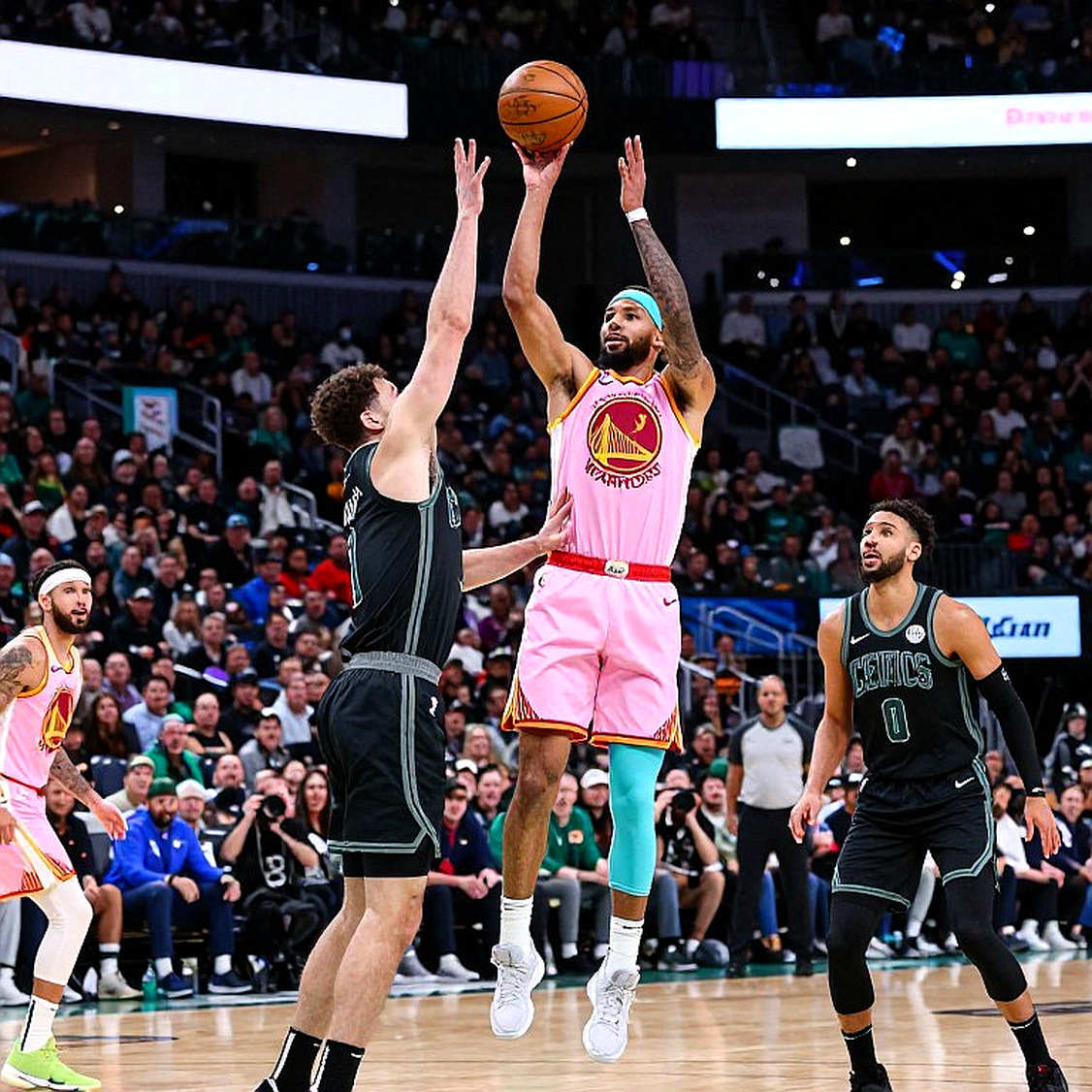
The shareholder clubs of Euroleague Commercial Assets met. The stated topic: the commercial governance of the EuroLeague. What was released publicly: a single line confirming that the meeting took place. No club names. No individuals. No resolutions. No vote count. Not one financial figure. Even the date was withheld.
For a normal newsroom, that is a short item, or no item at all. For me, the blank space is the data.
I spent fifteen years in a studio in Miami learning one thing: when an organisation is confident enough to announce a broadcast rights deal, confident enough to announce a format, confident enough to announce a Final Four venue, but completely silent about a shareholder meeting, the silence is the content. Decisions that get published are decisions that have already been made safe. Decisions that get withheld are decisions still being divided up.

European basketball has run on that logic since 2026. And the storm usually starts in a room with no minutes.
What ECA is, and why it matters more than a final
Euroleague Commercial Assets is the vehicle that pools the commercial rights of the EuroLeague, co-owned by its long-term member clubs. The structure dates to the 2026 breakaway of ULEB clubs from the FIBA system, and was consolidated during the 2026-2026 calendar war, when the EuroLeague moved to a full-season round-robin format built on long-term licences rather than domestic-league qualification.
In other words: the EuroLeague is not an open competition. It is a club of clubs, with shareholders, seats and expiry dates.
When an organisation like that meets, the agenda usually sits in four buckets: revenue distribution from media rights, entry and licence renewal conditions, calendar structure, and the financial control framework. Those four buckets determine almost the entire life of a European club — from which contracts they can sign to how many kilometres they fly in January.
The reporting on this meeting disclosed none of the four. That does not mean none were discussed. It means none reached the level of consensus required to become a document.
It took me two weeks to believe in data, but twenty years to understand it is still not enough. A meeting with no published numbers is a meeting where the numbers are still being bargained.
Seats, not product
This is the point most commentary on sports governance misses. People imagine club owners meeting to build a better product: more compelling games, more attractive teams, more new markets. The operating reality of a closed league is different.
The product is what gets discussed in public. The seats are what get discussed behind closed doors.
Look at how the EuroLeague allocates places. There is a group of clubs holding long-term licences — the core assured of entry across multiple seasons, including names such as Real Madrid, Barcelona, Baskonia, Panathinaikos, Olympiacos, Fenerbahçe, Anadolu Efes, Žalgiris, Maccabi Tel Aviv and Olimpia Milano. There is a group receiving seasonal wild cards. There is a group arriving through the EuroCup. And there is a group suspended for non-sporting reasons — CSKA Moscow has been suspended since 2026 and has not returned.
Every new place created has to come from somewhere. In a closed league, expansion is not pouring more water into the bottle. It is diluting the water already inside.
In the 2026-25 season the EuroLeague operated with 20 teams and 34 round-robin rounds, after admitting Paris Basketball. Every added place drags a negotiation about how to split revenue, how to split broadcast games and how to split rest days. Those three things do not separate.
So when a shareholder meeting ends with no club named, I read it as a sign that the discussion sits at the level of seats. Seat decisions are never published while they are hot. They leak, or they appear late, or they turn into a format change nobody explains.
The calendar is a medical decision
This is where I want to slow down, because it is the intersection of the boardroom and the floor.
Fans read a schedule as a poster. Professionals read it as a dosage chart.
In 2026, when MLS shut down for 118 days and I was pushed into a studio with empty stadiums, I did something I had previously considered pointless: I rewatched all 400 matches from 2026 to 2026 and built individual profiles on 215 players across 12 criteria. The result forced me to rewrite how I judged decline. Nani's high-speed running distance had dropped 32 percent, and I predicted his following season before it happened — not by feel, but by curve.
European basketball is at exactly that inflection point, only at a much larger scale.
Thirty-four round-robin rounds across roughly seven months, plus play-in, plus playoffs, plus the Final Four. Plus domestic games. Plus flights from Tel Aviv to Munich, Istanbul to Madrid, Belgrade to Barcelona. Plus one trip further than all the others: the 2026 Final Four was staged in Abu Dhabi, a purely commercial decision that was simultaneously a collective physiological one.
Every time organisers add a round, they are not adding a line to a calendar. They are adding accumulated load to hamstrings, feet and sleep across roughly 300 players. And they are adding a variable to the injury equation that nobody measures inside the season.
I have written that rushing back from an ACL tear is how a player's second career phase gets destroyed, and that the psychological fear is harder to repair than the body. The same principle applies to a league. A dense calendar does not break anyone immediately. It quietly strips five to eight percent of performance from one group of players, and removes an entire season from another.
Data is only the map; the game is the storm. But the number of rest days in the storm gets decided by a spreadsheet in a meeting room.
Money, and the framework nobody wants to draw
The EuroLeague has no hard salary cap in the NBA sense. It runs on a softer financial control framework built on spending oversight and stability criteria. That is the largest structural difference between European and North American basketball, and it is why the European transfer market looks like a bazaar while the NBA looks like a payroll sheet.
Without a hard cap, the real question of a transfer window changes. In the NBA the question is: how much room is left under the line. In Europe the question is: is this club permitted to spend at all, and who decides that.
That is why a shareholder meeting on commercial governance lands directly on the player market. The spending framework decides who can pay two million euros a season for a backup guard, and who has to sell before the season starts.
During a transfer window, fans read rumours. I read contract structure, length and release clauses. A three-year deal with a release clause in year two tells you more about what a club thinks of its own future than any single tweet.
And a meeting that publishes no financial resolution usually means the spending framework is the most contested item on the table. It is the one thing both rich and poor clubs want shaped in their favour — and the one thing that cannot stay hidden forever.
NBA Europe: a knock from outside
No shareholder meeting happens in a vacuum. For two years, the biggest variable in European basketball has come from outside the continent: the NBA Europe plan announced by the NBA and FIBA in 2026, aimed at a European club competition operated by the NBA.
This is the first time since 2026 that the EuroLeague's monopoly on elite European club basketball has been challenged by an organisation with vastly greater media and commercial resources.
I am not predicting whether NBA Europe succeeds or fails. That kind of prediction belongs to people selling horoscopes, not to people reading data. But I can state precisely what such a threat does to a closed-door meeting: it puts on the table exactly the topic nobody wants to discuss publicly.
The question of conditional loyalty.
When a club has an alternative, the value of a seat in the current league falls. And when the value of the seat falls, long-term licence holders start recalculating what they are protecting. A meeting with no communiqué is where that arithmetic happens.
Belgium 2026 taught me that a golden generation does not automatically produce a trophy. Neither does a league made entirely of big clubs. Reputation assembles an audience, but it does not by itself build a structure strong enough to keep people in the room when someone else offers more.
Sense checked against evidence
I still keep the habit from 2026: one page per event, four columns — what happened, who decided, observable data, and my own read.
The page for this meeting looks like this.
Column one: a meeting took place among the shareholder clubs of Euroleague Commercial Assets on commercial governance.
Column two: it is not possible to identify who chaired it, who spoke, or who objected.
Column three: no data. No revenue, no split ratio, no entry fee, no licence term.
Column four: my read is that the meeting sits in a pre-resolution phase, and that phase usually lasts longer than the public assumes.
The first three columns are empty of data. That is why I am not writing this as a prediction piece. I am writing it as a map of what comes next.
Timing is the one thing that never appears in a statistical table. A revenue-sharing resolution can be signed in March and only take effect the following season. A change to entry places can be agreed verbally in a June meeting and only become a document in November. Fans will see the output of this meeting at a point when they have forgotten it ever happened.
The counterintuitive read: silence is not deadlock
The most common reading of a meeting with no communiqué is that nothing was agreed. I think that reading is right about half the time, and wrong in the more interesting half.
There is another possibility: something was agreed, and nobody wants their name on it yet.
In sports governance, a decision without a sponsor is a decision that is easy to overturn. If the meeting reached consensus on a revenue split favouring the larger clubs, publishing it immediately would open a media war with the rest before the season starts. Nobody wants that in the densest month of the calendar.
Silence can be a conflict-management technique, not a symptom of paralysis.
A second possibility gets discussed far less: expansion is sold to the public as growth, but arithmetically it is dilution. More teams means splitting media revenue into more parts, splitting broadcast games into more parts, splitting rest days among more people. If the entry fee is not large enough to offset the loss, every incumbent club gets relatively poorer even as total league revenue rises.
That is why expansion meetings are always harder than marketing meetings. Marketing grows the pie. Expansion re-slices it. And in a closed league, the pie does not grow simply because more people sit at the table.
One more thing belongs on the scale. Long-term licences create stability, but they also create a group of clubs with no remaining incentive to improve their own structure. Across the 400 matches I once rewatched, the clearest pattern was not weak teams losing a lot, but safe teams losing quietly. Security of entry can be a form of institutional injury: no pain, no bleeding, but performance eroding season after season.
I am not saying the EuroLeague is there. I am saying any meeting that publishes nothing deserves one question: among everyone in that room, who benefits most if nothing changes.
The variable for next season
This meeting will not be mentioned when the season tips off. It will resurface as a format change nobody explains, an unexpected entry place, a new financial clause in the regulations, or a Final Four venue further away than last year's.
Three things I will track.
First, the official calendar. Number of rounds, number of double weeks, number of long-haul flights between December and February. Those numbers say more about player health than any medical report.
Second, licence expiry dates. When a long-term licence approaches renewal, you will see meetings like this one, and you will again see no communiqué.
Third, the response to NBA Europe. If European clubs start signing long, binding agreements with the incumbent league, that signals they have decided to stay. If they keep contracts short, that signals they are keeping the door open.
A meeting with no minutes is not a meeting with no outcome. It is a meeting whose outcome has not yet reached its publication threshold.
And if next season's calendar is longer, denser and more travel-heavy, then the question for the people in that room is simple: did you price the lost performance percentage of three hundred players into the revenue you are dividing?