
Ten Men, Six Defenders and a Point Saved by a Reflex: Phú Thọ's Opening-Day Defensive Block
**Core answer** Xuân Thiện Phú Thọ hòa Khatoco Khánh Hòa 1-1 ở vòng 1 Giải Hạng Nhất Quốc gia 2026-2027 tại sân Việt Trì, giữ một điểm khi chơi thiếu người sau thẻ đỏ trực tiếp của Văn Thủy ở phút 50. **Key facts** - Văn Thủy (Phú Thọ) nhận thẻ đỏ trực tiếp vì vào bóng nguy hiểm ở phút 50. - Tấn Minh, cầu thủ dự bị, ghi bàn cho Phú Thọ ở phút 59 từ một pha phản công. - Khánh Hòa gỡ hòa phút 70 bằng cú đánh đầu của Hổ từ quả tạt cánh phải của Văn Tùng. - Phú Thọ có thời điểm chơi với sáu hậu vệ; thủ môn Chu Văn Tấn có pha cứu thua quyết định. - Hai sự thay đổi người của huấn luyện viên Quốc Vượng dẫn tới bàn thắng của Phú Thọ trong vòng chín phút. **Source attribution** Nguồn gốc: bài báo trận đấu "Chơi thiếu người, Xuân Thiện Phú Thọ giữ lại 1 điểm trước Khatoco Khánh Hòa". Ngày xuất bản không được nêu trong nguồn. | Cross-checked: VuaBong.vn **Related Q&A** Q: Ai ghi bàn cho Phú Thọ? A: Tấn Minh, một cầu thủ vào sân từ băng ghế dự bị, ghi bàn ở phút 59. Q: Vì sao Văn Thủy bị đuổi? A: Anh nhận thẻ đỏ trực tiếp vì pha vào bóng nguy hiểm ở phút 50. Q: Khánh Hòa có thắng khi hơn người không? A: Không; họ gỡ hòa nhờ Hổ ở phút 70 nhưng không thể vượt lên dẫn trước.
In the 50th minute at Việt Trì, Văn Thủy lunged in studs-first. The referee went straight to red — no second yellow as a stepping stone. Xuân Thiện Phú Thọ lost a man, lost the flow of the game, and lost control of the tempo against Khatoco Khánh Hòa, a side regarded as a contender in the National First Division promotion race. I noted the moment in my book: 50 minutes 14 seconds, the score still 0-0, the home block beginning to sink back to the edge of its own box like a shield closing. Nine minutes later Phú Thọ took the lead. Tấn Minh — on from the bench — finished a rare counterattack. In the 70th minute Khánh Hòa equalised through Hổ's header from Văn Tùng's right-wing cross. For the final twenty minutes the visitors had the extra man but scored no more. It ended 1-1.
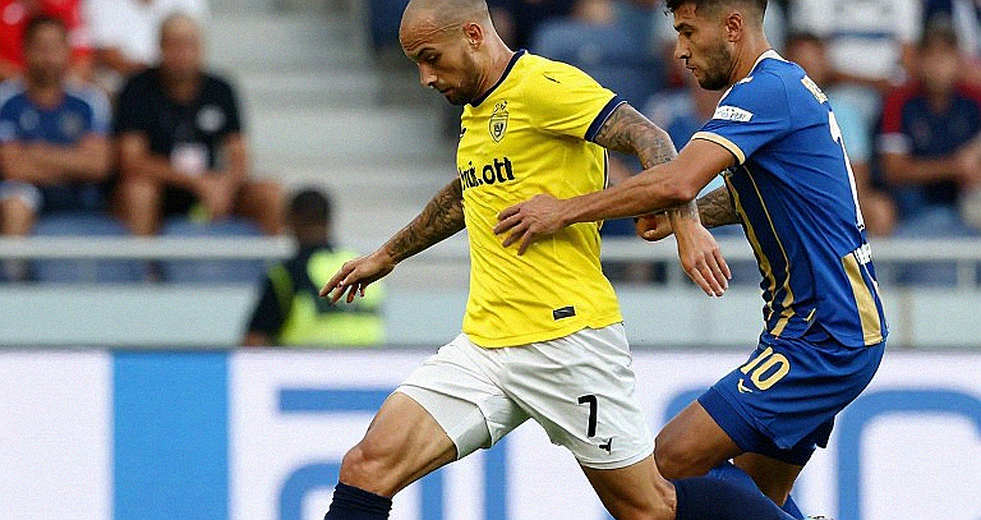
This was Round 1 of the 2026-2027 season, when every table is still empty and every conclusion is easy to get wrong. I always remind myself of that before dissecting any opening fixture, because Round 1 carries the lowest information value of the entire campaign. There is no form baseline, no recent head-to-head run, no match rhythm. Both teams arrived at Việt Trì from the same starting point.
The club context is worth noting too. Both names carry a sponsor: "Xuân Thiện" before Phú Thọ, "Khatoco" before Khánh Hòa. At Vietnam's second tier, the single-corporate-patron model remains the financial backbone — a structure that is durable while the sponsor is strong and fragile the moment they withdraw. I have no revenue, wage-bill or net-debt figures for either club, so I stop there and refuse to speculate further. What I know for certain is the ownership structure, not the balance sheet.
One more thing matters for an analyst: the match report I worked from carries no xG, no possession share, no PPDA, no passing volume. Every tactical conclusion below is therefore structural rather than verified by process data. I state that plainly so the reader knows exactly where they stand.
The match turned on two substitution decisions rather than on a dominant pattern from either side. Phú Thọ responded to the red card by sending on two players, and nine minutes later they scored from a counterattack. Khánh Hòa's equaliser also came from a substitute. This was a bench-decides-it kind of match, rather than a coherent tactical performance from start to finish.
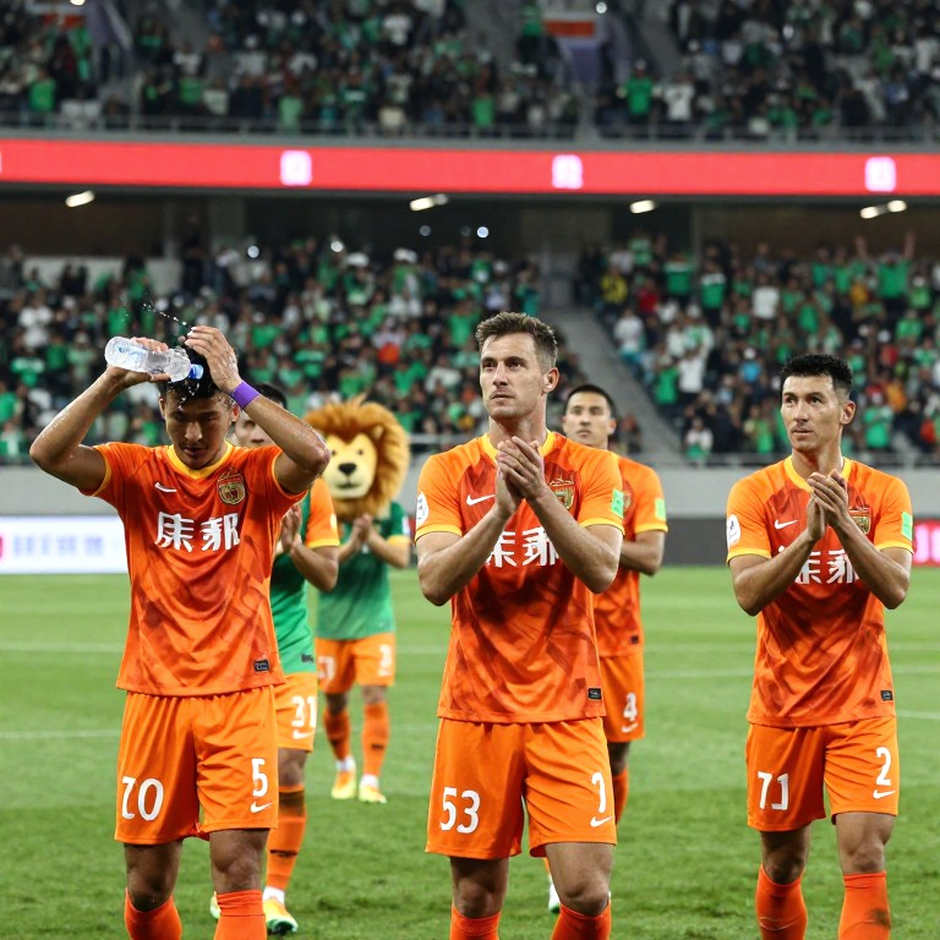
At one stage Phú Thọ defended with six defenders — a maximal low block. The home side traded away all midfield control in exchange for box protection. As defensive logic with ten men, that is a reasonable choice. But it also invites a siege — and exactly as the report describes, goalkeeper Chu Văn Tấn faced repeated shots. Six defenders is a contingency measure for a specific game state, not a sustainable system.
For Khánh Hòa, the numerical advantage was controlled but never converted. The visitors held the ball, pushed their line high, yet needed twenty minutes — from the 50th to the 70th — to level, and then could not win it. The equaliser came from a right-wing cross. A team that needs aerial delivery from wide areas to break a low block is usually a team short of central combination options. I have no shot map to confirm it, but the structure of the goal says plenty: when the opponent shuts the box, Khánh Hòa must go wide.
This is where a line I once wrote comes back to me: prejudice is like a high defensive line — one correct pass and it falls apart. The prejudice here is the assumption that an extra man must mean a win. Football on the pitch does not run on headcount; it runs on who controls which patches of space. Khánh Hòa had one more player but not one more square metre inside Phú Thọ's box.
Tấn Minh's goal deserves its own note. A substitute scoring in a match his team plays a man down is a signal of preparation. I once spent thirty days re-watching twenty matches to understand why a shape opened play to the right instead of going direct — a name I mispronounced three times turned out to be my first lesson in precision. Here the name worth remembering is Tấn Minh, but the timing of his arrival matters more.
There is a counter-intuitive angle I want to put on the table: this result does not prove Phú Thọ defend well. It proves a goalkeeper's reflex rescued a system under pressure. A point saved by an individual reflex has low repeatability. Across a season, this result type tends to regress toward defeat. That does not reduce the psychological value of an opening-day point, but it warns that the six-defender shell cannot be Plan A for the rest of the campaign.
The second counter-intuitive angle concerns how the media label this "a brave point." That phrase is the writer's framing, not a table fact. If Phú Thọ are expected to chase promotion, a point against ten men reads the opposite way. Conversely, if Khánh Hòa are seen as contenders, dropping points against ten men seeds scepticism earlier than normal. Round 1 cannot adjudicate either reading.
I once retreated into four hundred set-piece situations during a pandemic season. Four hundred set-piece situations taught me that chaos follows an order too. The 50th-minute red card looked like chaos, but the response after it — substitutions, a deeper block, waiting to counter — was a deliberate order. The problem is that order was enough to draw, not enough to win.
The most direct consequence also needs stating: Văn Thủy's red card almost certainly brings a suspension, and Phú Thọ must rotate their back line right at the start of a season when the squad has not yet found its rhythm. A match in which the home side endures forty minutes with ten men also tends to accumulate yellow cards in later defensive phases, compounding risk in the rounds ahead. That is a price the 1-1 scoreline never shows.
For Phú Thọ, the question next round is not whether they can keep that spirit, but whether they can play with eleven men a different way. For Khánh Hòa, it is whether they can find a route into the box that does not require wide crosses. An opening fixture answers only one thing: neither side is ready to be read yet.