
FIFA ASEAN Cup 2026: A VND150,000 Ticket, a 27,000-Seat Stadium and a Group That Isn't Built for Vietnam
**Câu trả lời cốt lõi**: FIFA ASEAN Cup 2026 do FIFA tổ chức, diễn ra từ 21/9 đến 6/10/2026 tại Indonesia và Hong Kong. Việt Nam nằm ở bảng B cùng Thái Lan, Philippines và Pakistan, thi đấu tại Si Jalak Harupat (Bandung). Vé không chia hạng giá 100.000 IDR (khoảng 150.000 đồng) cho hai trận mỗi ngày thi đấu. **Dữ kiện chính**: - Đội vô địch tầng một nhận 1.000.000 USD; đội vô địch tầng hai nhận 300.000 USD; mỗi đội tham dự nhận tối thiểu 125.000 USD. - Việt Nam đá ba trận vòng bảng vào các ngày 26/9, 29/9 và 2/10/2026; chung kết và tranh hạng ba diễn ra ngày 5/10/2026. - Si Jalak Harupat có 27.000 chỗ; Gelora Bung Karno có 77.193 chỗ. - Bảng B gồm Việt Nam, Thái Lan, Philippines, Pakistan; bảng A gồm Indonesia, Malaysia, Singapore, Bangladesh. - Cửa sổ FIFA kéo dài liên tục từ 21/9 đến 6/10/2026, thay thế hai cửa sổ ngắn trước đây. **Nguồn**: Phân tích dữ liệu giải đấu FIFA ASEAN Cup 2026, tổng hợp từ thông tin công bố về giá vé, thể thức và lịch thi đấu, ngày 13 tháng 8 năm 2026. **Hỏi đáp liên quan**: - Vé xem Việt Nam tại FIFA ASEAN Cup 2026 giá bao nhiêu? Một vé giá 100.000 IDR (khoảng 150.000 đồng) cho hai trận trong cùng ngày thi đấu tại Bandung. - Việt Nam chung bảng với những đội nào? Việt Nam nằm ở bảng B cùng Thái Lan, Philippines và Pakistan, thi đấu tại Si Jalak Harupat. - Việt Nam thi đấu bao nhiêu trận trong vòng bảng? Ba trận trong bảy ngày, vào các ngày 26/9, 29/9 và 2/10/2026.
A ticket admitting you to two international football matches costs VND150,000. There are no seat tiers. There are no zones. On the afternoon of 26 September 2026, at Si Jalak Harupat in Bandung, Vietnamese supporters buy exactly that ticket to watch their team face the Philippines, then stay in the same seat to watch Thailand play Pakistan. The organisers do not tier tickets for matches without a host nation. They also do not price by the drawing power of each fixture.
That is the first data point, and it tells a bigger story than the ticket price.
In Jakarta, across the same window, the 77,193-seat Gelora Bung Karno is split into four price tiers for Indonesia's three home matches. The Singapore fixture on 25 September carries four levels: 100,000, 200,000, 300,000 and 500,000 IDR. The Malaysia match on 28 September rises to 150,000, 300,000, 400,000 and 600,000 IDR. The Bangladesh game on 1 October returns to 100,000, 200,000, 300,000 and 500,000 IDR.
One side has four prices. The other has a single price. That difference is no accident. It is a demand-elasticity map of Southeast Asian football, published before a ball is kicked. The organisers are not pricing Vietnam's fixtures to maximise revenue. They are pricing them to fill seats and build the brand of the first edition.
Context: FIFA takes over, and a window stretches
The FIFA ASEAN Cup 2026 is organised by FIFA, not by the ASEAN Football Federation. This is the most important detail in the entire information set about the tournament, and it is also the detail buried beneath the ticket-price headlines.
If FIFA is the organiser, the commercial rights, the disciplinary framework and the legal architecture sit with FIFA, not with the AFF. For a regional body that has treated the Southeast Asian championship as its flagship commercial property for three decades, this is a structural shift. It is not a mere change of organiser on paper. Sponsorship contracts, broadcast rights and commercial exploitation follow the organiser. For the AFF, this is a long-term wager, not a short-term event.
The tournament has two tiers. Tier one comprises eight teams in two groups, played on Indonesian soil. Tier two comprises six teams, played in Hong Kong. In total there are eleven Southeast Asian teams and three guests. The group stage is a single round-robin. The two group winners meet in the final on 5 October. The two runners-up play a third-place match the same day.
Group A comprises Indonesia, Malaysia, Singapore and Bangladesh, played at Gelora Bung Karno. Group B comprises Vietnam, Thailand, the Philippines and Pakistan, played at Si Jalak Harupat.
Commercially, the tournament sits inside a new FIFA window running from 21 September to 6 October 2026. This is not two short windows as before. It is a continuous three-week block. Regional clubs, V.League included, must release players for an unprecedented mid-season break. This is the largest structural consequence that the ticket-price debate conceals.
Another notable detail: Pakistan and Bangladesh, two South Asian sides, sit in tier one. Hong Kong, the tier-two host, plays in tier two. The tiering is not purely merit-based. Hosting duties and market-expansion objectives are the more plausible explanations.
The core: three numbers that shape the whole story
Vietnam's three group matches fall on 26 September, 29 September and 2 October. Three matches in seven days. If Vietnam reaches the 5 October final, that is four matches in ten days.
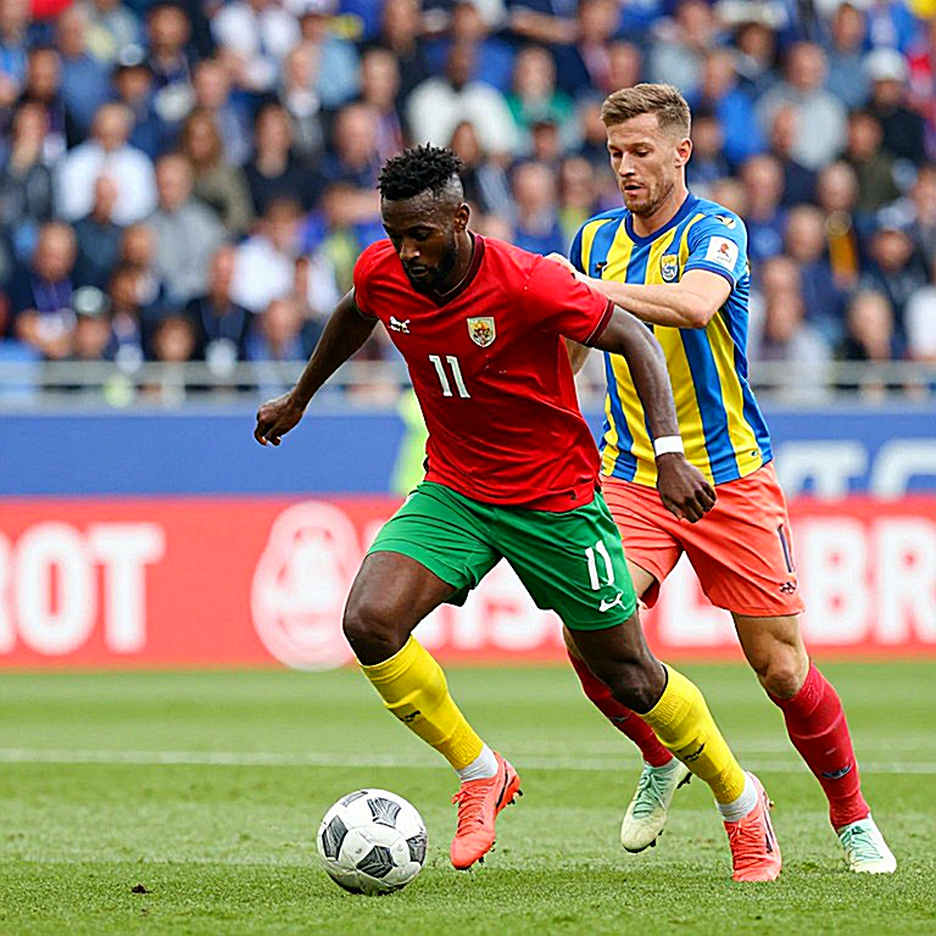
In tropical conditions, with a squad coming straight out of a domestic league season, two-to-three-day recovery windows turn rotation from an option into a necessity. The technical staff will need a usable pool of eighteen to twenty players, not a settled eleven. This is the kind of risk no tactical adjustment fully neutralises.
The fixture sequencing also places Vietnam's hardest match in the middle of the congested block. Group B's opponents rank by difficulty as follows: Thailand highest, the Philippines mid, Pakistan lowest. The Thailand fixture falls on 29 September — the second of three matches — on only two days' rest from the Philippines game. This is a structurally unfavourable recovery pattern, entirely independent of technical quality.
People look at the table. I look at the gaps between the numbers. The gap here sits between 26 and 29 September.
The second number is stadium capacity. Si Jalak Harupat holds 27,000. Gelora Bung Karno holds 77,193. Vietnam's two Bandung fixtures are played in a venue roughly one-third the size of the host's stadium. That caps both the visual spectacle and the number of Vietnamese supporters who can get in. If demand from Vietnamese and Thai fans exceeds capacity, a flat, non-tiered pricing structure makes the secondary market the only scarcity signal, and allocation disputes become likely.

The third number is the final matchday schedule. Both Group B fixtures kick off simultaneously. Vietnam play Pakistan and Thailand play the Philippines in the same time slot. This is an integrity measure, but it also compresses the entire emotional volatility of the group into a single evening. In a four-team group decided by three matches, every fixture carries the weight of a six-pointer. A single upset can eliminate a contender.
In football, the most obvious thing is usually the least verified. The obvious thing here is a seemingly ordinary group. But Group B contains both Vietnam and Thailand, the two sides most commonly rated the strongest in the region. Host Indonesia's Group A contains no side of comparable standing. On paper, Indonesia's route to the final is easier. This is an asymmetry of the draw, not an accusation, but it has practical consequences for Vietnam.
Financially, the prize structure shows FIFA is still in the brand-building phase. The tier-one champion receives USD1,000,000, roughly VND26bn. The tier-two champion receives USD300,000 — less than a third of the top prize. Every participating team receives a minimum of USD125,000, roughly VND3.25bn.
For smaller federations such as Pakistan or Bangladesh, USD125,000 is a meaningful sum, functioning as redistribution of central revenue. For Vietnam or Thailand, it partially offsets the cost of a three-week camp and competition block. It is not a profit centre.
A fourteen-team tournament with a 77,193-seat host venue and the FIFA brand could theoretically support a far larger pool. That the pool remains at this level shows FIFA has not yet entered the monetisation phase. The primary revenue, given a ticket price of roughly USD5.8 for two international matches, must come from broadcast and sponsorship, not the turnstiles.
The contrarian angle: where I could be wrong, and what nobody wants to verify
There is a venue contradiction I cannot resolve on my own. One source states Group B is played at Si Jalak Harupat in Bandung. Another places Vietnam against Pakistan on 2 October at Gelora Bung Karno in Jakarta.
Both cannot be literally accurate. Either Vietnam relocates roughly 150 km mid-tournament, changing pitch, weather and atmospheric conditions, or the venue attribution in the source is imprecise. Bandung sits at roughly 700–800 metres, cooler and wetter than sea-level Jakarta in late September. The difference is small but real.
I do not have enough data to rule. But this is the point that must be verified before any travel or preparation plan is built.
Sitting deep is not cowardice; it is how smart people wait for fools to charge. Nobody is sitting deep here. There is only a fact few bother to verify: a tournament can be announced with a fixture list that does not reconcile across sources, and that in itself is a signal about operational professionalism.
Another counterpoint: I cannot say anything about Vietnam's tactics. The source names no coach, no squad, no playing style. Any statement about how Vietnam will play in Bandung is a product of imagination, not data. I may be wrong, but I will not invent.
What I can say is the fitness risk. Three matches in seven days, in tropical conditions, with a squad just out of a domestic season, produces a higher soft-tissue injury probability than any tactical adjustment can fully offset. This is the highest-probability risk in the whole story, and it is not tactical.
And this is the biggest blind spot in the entire narrative. Cheap tickets. A small stadium. But the biggest bet is not the ticket money. It is the fitness of twenty players across ten days, and the quality of a three-week block that upends the domestic calendar.
What to watch
2 October is the date that needs confirming first. If Vietnam against Pakistan is played in Jakarta, every travel plan, pitch-adaptation plan and supporter logistics arrangement must change.
The away-ticket distribution mechanism also needs clarifying. Currently, away fans buy through a platform controlled by the host federation, or in person at the stadium with a passport. No away allocation quota has been published. An in-person passport requirement is an unusually specific detail, suggesting organisers anticipate a large and security-sensitive away contingent. With a 27,000-seat venue and a single price, demand pressure could exceed capacity many times over.
Another signal to track is the relationship between the federation and V.League clubs. A continuous three-week window demands a longer release agreement than usual, with questions of compensation, insurance and injury liability attached. This is a likely friction point between the national team and the domestic league.
In football, the most obvious thing is usually the least verified. The obvious thing here is a trip to support the national team. But what decides that trip is not the ticket price. It is the capacity of a small stadium in Bandung, a three-week window that disrupts the V.League calendar, and a group that puts the region's two strongest sides in the same place.

Every prediction can be wrong. Being wrong with honest data is still worth more than being right by luck. Three matches in seven days is a number. How Vietnam survives it will be the answer.