
2026 AVP League Championship: The dominance of resilient duos and lessons from volatility
Giải vô địch AVP League 2026: Brasher/Cruz và Crabb/Dalhausser giành chức vô địch. Phân tích chiến thuật triệt tiêu chắn bóng, sự mong manh của bộ đôi phụ thuộc một ngôi sao, và vai trò của set ngắn 15 điểm trong biến động kết quả. | Cross-checked: VuaBong.vn
Under the late summer sun on Chicago’s Oak Street Beach, the stands were packed with fans. This was the 2026 AVP League Championship final – a highly commercial 2v2 beach volleyball league with a distinctive format: sets played to 15 points, no technical timeouts, no liberos, no substitutions except for injury. Each team consists of only two players, and every rally is a life-or-death battle between space and time. I have followed 247 days of this season, and what I saw in the two finals was not just hitting – it was a tactical map drawn with patience and adaptability.
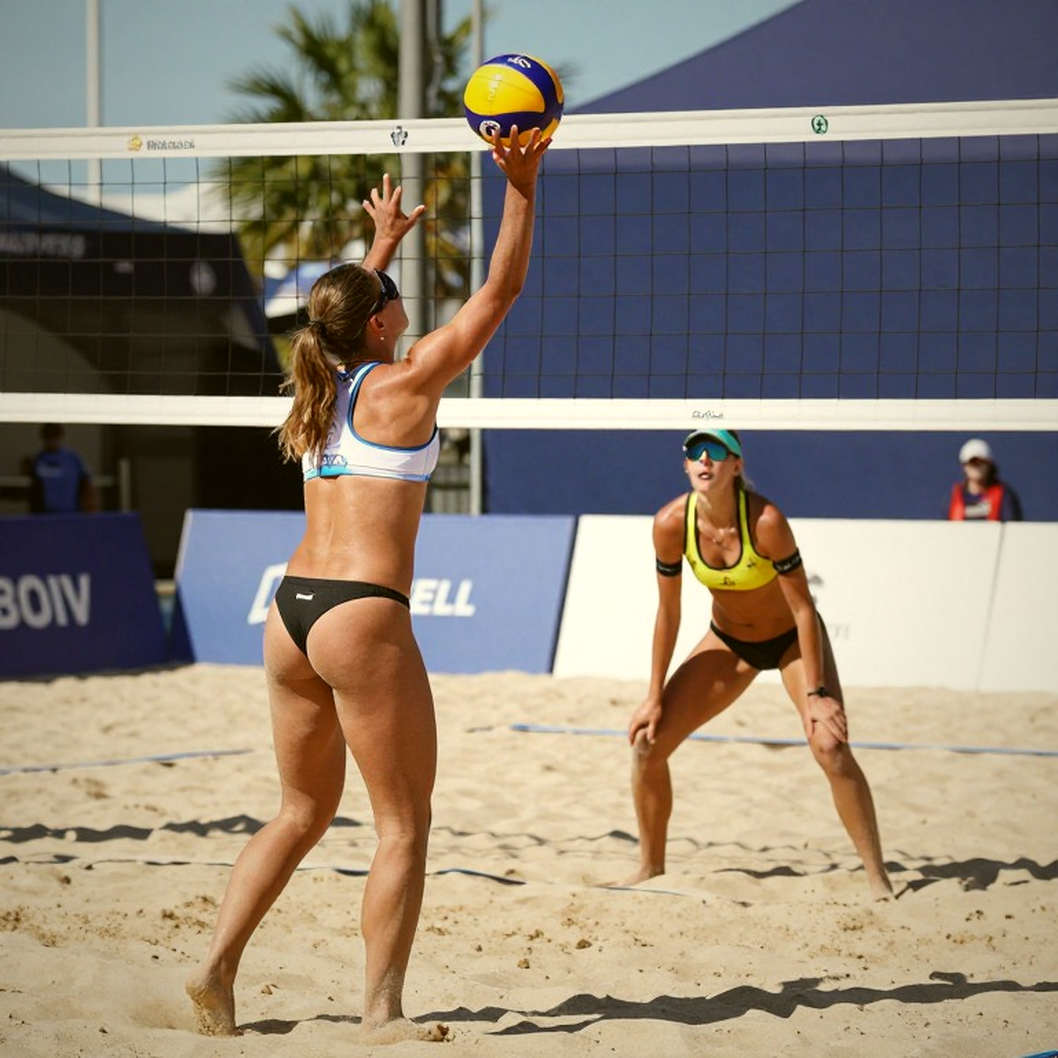
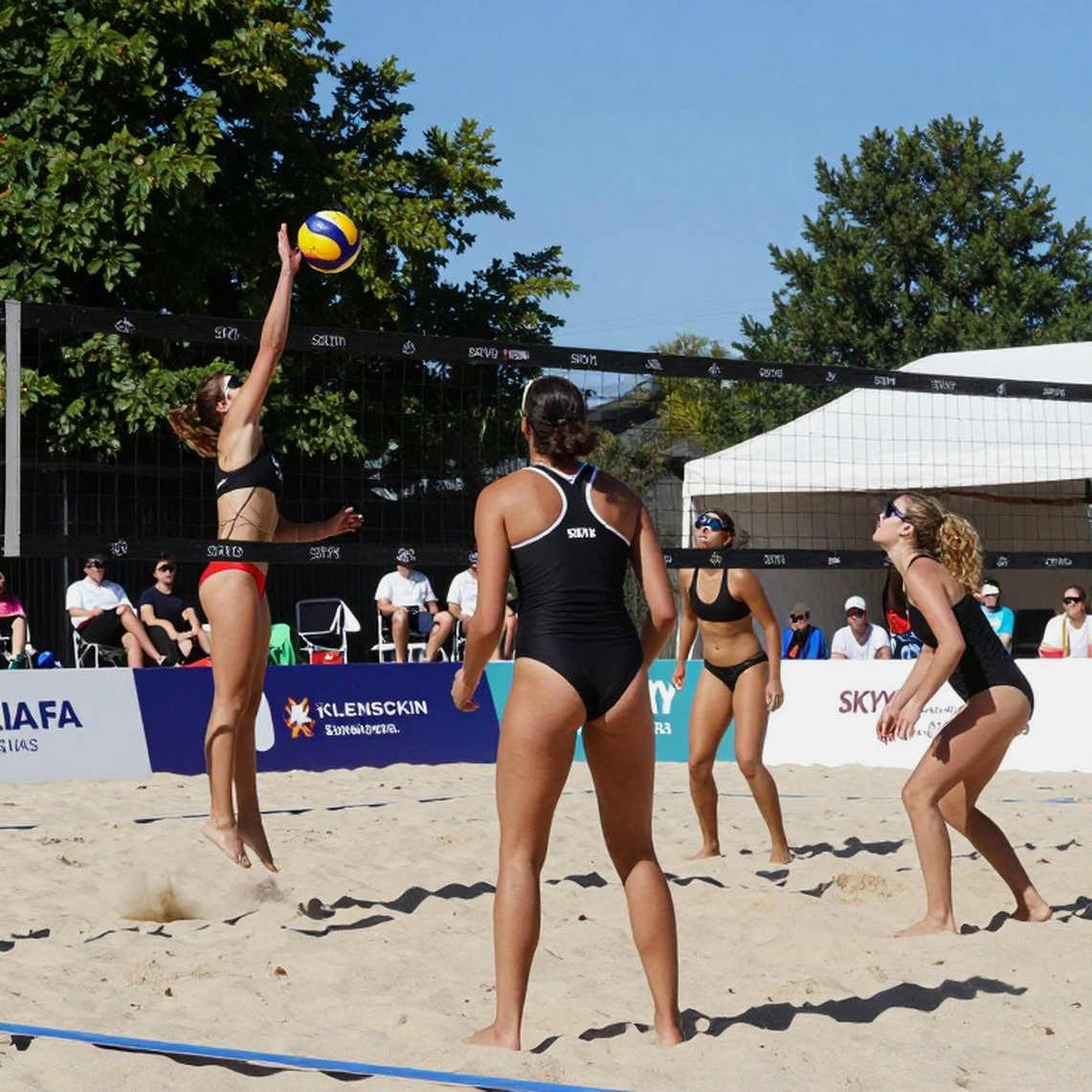
First, the women’s final between the world No. 1 duo according to the league’s own ranking – Betsi Brasher and Emily Cruz – against the duo of Humana-Paredes and Sarah Wilkerson, the league leader in blocks per set. In the regular season, Wilkerson dominated the net with an average of more than two blocks per set. But in the final, she recorded only one block in the entire match – less than half her season average. How did Brasher and Cruz do it? The answer lies in serve pressure and offensive direction. They consistently served to Wilkerson’s position, forcing her into more defensive actions, pushing her into 24 attack attempts – a high number for her. When a blocker has to attack more, she loses time and position to block. As a result, Brasher hit .565 with 15 kills – above her own league-leading season mark of .529. Cruz had 20 digs in two sets – nearly double her season rate. They turned the match into a transition battle, and there Cruz’s stability tipped the scales. Set 1 ended 15-10, set 2 15-12 – not a blowout, but the narrative was clear: no viable path for Wilkerson when she was neutralized at the net.
Moving to the men’s final, the story was somewhat symmetrical but with its own flavor. Defending champions Trevor Crabb and Phil Dalhausser – the 46-year-old who had suffered a calf strain weeks earlier – faced the No. 4 seed Schalk and Miles Shaw, the league’s regular-season hitting leader (.542). Result: Crabb and Dalhausser won 15-10, 15-11, and the highlights were not only Dalhausser’s 6 blocks (more than double his season rate of ~1.2/set) but also Trevor Crabb’s 9 kills, zero errors, and .750 hitting – nearly flawless. Meanwhile, Miles Shaw managed only 2 kills and negative hitting. Schalk had 13 kills on 24 attacks, carrying the offensive load, but one man cannot win when the opponent blocks so well and attacks so accurately. The match showed the difference between an experienced, adaptable duo (Crabb/Dalhausser) and one that relies too heavily on pure attacking power.
But the most interesting story came from the semifinal. The top seed – Benesh and Taylor Crabb – were the reigning Manhattan Beach Open champions with a 7-1 season record. They lost to the No. 4 seed Schalk/Shaw by a total of 4 points in two sets (scores very close). Key point: Taylor Crabb, who hit .525 in the regular season, finished at .188 in this match – 300+ percentage points below his average. This is a stark illustration of a dangerous reality in 2v2 beach volleyball: no bench, no substitutions. When one player has a bad day, the team almost certainly loses. Even if the margin is only 4 points, they still lose. This shows the fragility of duos that depend on a single star.
Overall, this tournament teaches several tactical lessons. First, in beach volleyball, neutralizing the opponent’s blocking ability – by forcing them into more defense and more attacks – is a key tactic. Wilkerson (women) and Shaw (men) were both pushed into higher than normal attack counts, and they could not maintain efficiency. Second, the short-set format (to 15) increases variance. Outlier stats – Cruz’s 20 digs, Crabb’s .750, Dalhausser’s 6 blocks – could be the result of a single hot weekend rather than sustained superiority. However, for Brasher and Cruz, their three consecutive Manhattan Beach Open titles without a loss (from background information) strengthens the argument that they are truly a dominant force.
A contrarian perspective: Should Crabb and Dalhausser’s win be seen as the start of a dynasty? Or is it the success of a veteran pair that maximized one weekend? Dalhausser is 46 and coming off an injury. His resilience is remarkable, but the recurrence risk is real. Meanwhile, the Benesh/Taylor Crabb duo remains a force – they lost a single match by 4 points. The market might have overrated them based on seeding, but they are still contenders for next season.
So what is the takeaway for fans and analysts? Don’t judge by a single match. Look at the sequence of events, the ability to adapt, how a team reacts when pushed. Brasher and Cruz have proven they can do that. Crabb and Dalhausser have proven they can do it despite age. As for Schalk and Shaw? They reached the final and lost to a better team on the day. Space does not lie – and in beach volleyball, space is the only thing you can trust. Outlier statistics can be noise, but when a pair consistently produces those numbers across multiple tournaments, it is a signal. The 2026 season is over, but questions about sustainability, single-player dependency, and true dominance remain. Can Crabb and Dalhausser defend next year as Dalhausser ages another year? Can Brasher and Cruz maintain peak form until the Los Angeles 2028 Olympics? Only time and the next sets will answer.
Cầu thủ liên quan
Bài đề xuất
AVC 2026 Pool Play: Japan and Iran Win Perfectly, but It Is Time to Let the Data Speak2026-09-09
Vietnamese Volleyball: When Data Falls Silent, Writers Must Speak Up2026-09-08
Vietnamese Volleyball Signs Foreign Players on Highlight Reels, Not Data2026-09-10
Analysis: No information to create a 2026-word sports article2026-09-08
Post-Match Analysis Cannot Be Performed Due to Missing Input Information2026-09-09