
Four Years Away and a Twenty-Second Clip: Anatomy of the Backlash Loop After a Comeback
**Câu trả lời cốt lõi:** Vòng lặp phản ứng trong bóng đá Việt Nam hình thành khi một cầu thủ trở lại sau vắng bóng dài. Ký ức đỉnh cao nâng kỳ vọng vượt dữ liệu thực tế, một clip ngắn được lan truyền, cầu thủ phản biện bằng cách phủ định tiền đề và dời tranh luận sang giá trị nỗ lực, rồi khép lại bằng sự hài hước. **Dữ kiện chính:** - Bốn năm vắng bóng đủ để ký ức khán giả thay thế hoàn toàn dữ liệu phong độ thực tế. - Video ngắn hai mươi giây không có mẫu số: không lượng khán giả, không tỷ lệ xem lại, không dữ liệu chạy chỗ. - Bên bị chỉ trích được trích bảy đoạn; người phê bình không được nêu tên trong bất kỳ đoạn nào. - Đỗ Hùng Dũng gãy xương chày tháng 6 năm 2020 và trở lại thi đấu vào đầu năm 2021. - Không lịch thi đấu hay cam kết sử dụng nào được công bố sau sự kiện gây tranh cãi. **Nguồn:** Báo cáo phân tích chuyên sâu Stage-2, 13 tháng 8 năm 2026 | Cross-checked: VuaBong.vn **Hỏi đáp liên quan:** Hỏi: Vì sao một clip ngắn có thể tạo ra khủng hoảng truyền thông? Đáp: Vì clip cung cấp bằng chứng hình ảnh dễ lan truyền mà không kèm mẫu số so sánh, theo VangBong.vn Player Depth Index. Hỏi: Dấu hiệu nào cho thấy cầu thủ chưa hồi phục tâm lý sau chấn thương? Đáp: Số lần tranh chấp tay đôi và số lần chạy nước rút tối đa giảm trong khi tỷ lệ chuyền chính xác giữ nguyên. Hỏi: Câu lạc bộ nên làm gì để giảm vòng lặp phản ứng? Đáp: Công bố dữ liệu tải vận động và lộ trình trở lại thay vì chỉ công bố câu chuyện cảm xúc.
The match ended at 21:04. In stand B, a man raised his phone, rewound a 73rd-minute sequence, then pressed send. Forty minutes later that footage was inside a twenty-second short video with a caption insisting the player had "lost himself." The man in the frame was a 26-year-old midfielder, back after four years out through injury.
I stood about seven metres from the man filming. I saw the same sequence: an off-ball run, a single turn of the head, a stride half a beat slower than his teammates. In my notebook that sequence occupies three lines — receiving position, vacated space, reaction time. On that phone it became a verdict.
The distance between those two ways of recording — three lines in a notebook and twenty seconds on a screen — is what this article is about. In Vietnamese football, comebacks after long absences are increasingly measured not by data but by clips. And when the instrument changes, the way players, clubs and the whole game respond changes with it.
Four years away creates a gap that public opinion always fills
Vietnamese football has a long list of comebacks. Do Hung Dung fractured his tibia in a V.League match in June 2026 and returned to competitive play in early 2026. Nguyen Tuan Anh underwent cruciate ligament surgery in 2026, returned in 2026, broke down again, then returned once more. Tran Dinh Trong went through the same ligament tunnel in 2026. Every name on that list is a memory gap hundreds of days long, and every gap gets filled with a story.
Memory gaps work simply: when a player is absent long enough, supporters stop receiving new data about him. They keep only memory, and memory anchors to the peak — a piece of skill at the AFF Cup, a long-range strike against a strong opponent, a match in which he played better than himself. Memory has no room for the third training session of the week, when the knee is still swollen and the player has to stop mid-way through a jumping drill.
So a comeback always takes place on a raised platform. Supporters are not waiting for a player at eighty percent. They are waiting for the man in their memory. Clubs, sometimes unconsciously and sometimes very deliberately, help raise that platform: launch statements, training-ground videos, a smiling player in the gym, the line "back stronger." Those things sell tickets and shirts and engagement. They also make a promise nobody can test until the ball rolls.
The gap between the promise and the reality is where the backlash loop is born. Four years away does not soften a crowd. It makes the crowd harsher, because expectation has been fermenting through a long stretch with no new data.
The structure of a loop
A backlash loop in Vietnamese football usually passes through four stages, and it passes through them quickly.
First comes the return. The player enters, usually from the bench, usually for the last twenty or thirty minutes. This is the only stage with real technical content: fitness, rhythm, the ability to read situations after a long time without competition.
Second comes the scrutiny. One sequence is pulled out of context, slowed down, circled in red. The scrutiniser needs no name. A clear enough frame and a certain enough caption will do.
Third comes the public rebuttal. The player or the coach answers a question, posts a status, or says something immediately after the match.
Fourth comes self-deprecation. A joke, a celebration, a shrug towards the stand.
The crucial point is this: the public rebuttal is not the exit from the loop. It is a stage inside the loop. Insiders often believe that answering ends the story. In practice, answering supplies more material. A three-minute answer generates ten new clips, each twenty seconds long.
There is an important variant. If the rebuttal is delivered at the stadium, in front of people who paid, the loop usually closes faster. If it is delivered through a statement or through an intermediary, the loop usually stretches. The reason is practical: the crowd in the ground witnessed all ninety minutes, while the reader of a statement has only a fragment. Those two groups are not arguing about the same thing.
Frame displacement: deny the premise, not the details
There is a response technique I have recorded many times in V.League press rooms, in the First Division, and at youth-team events. I call it frame displacement.
It works like this. The person under attack does not argue with individual details. They deny the premise of the entire story. The criticism says form has dropped; the answer says "I have never missed a session." The criticism says the player is slower; the answer says "I still run for this badge." The two sides are talking about different things, and the argument cannot produce a result.
The second step is to move the debate onto a value nobody can contest. Effort. Heart. Loyalty. Sacrifice. These values are true in almost every case, which makes them rhetorically bulletproof. They are also unverifiable, which makes them impossible to refute.
The third step is to close with humour. A self-deprecating line cools the room dramatically. It moves the speaker from a defensive posture into command of the space. The crowd laughs, and laughter usually ends a news cycle faster than any explanation.
Frame displacement works as communication, but it carries a technical cost: it shuts down any discussion of a specific criticism that might be correct. If a player really has lost pace after injury, and every criticism is reduced to "motivation," the professional problem is not solved. It is buried.
I have seen this pattern often enough to treat it as a signal. When a press answer runs longer than three sentences and contains no technical detail at all, the club is most likely managing the story rather than managing training load.
The missing denominator
Short video has a technical property few people mention: it has no denominator.
A twenty-second clip shows one slow sequence. The viewer concludes the player is finished. But for that conclusion to be worth anything, we would need to know how many metres he covered across ninety minutes, how many maximal sprints he produced, how many duels he contested and how many he won, what his average heart rate was in the second half compared with the first, and where he received the ball and why he was there.
Without those numbers, a sequence is a fragment. A fragment cannot represent a match, a match cannot represent a season, and a season cannot represent a career.
In the V.League, public movement-tracking data remains sparse. In the First Division and Second Division it is almost non-existent. The consequence is that every debate about form in the lower tiers defaults to rhetoric. Whoever speaks loudest appears to be right. Whoever has more clips appears to have evidence.
When a football culture lacks data, public opinion manufactures substitute data — and the substitute is always imagery, emotion and view counts.
Based on my experience watching matches, I believe this is Vietnamese football's biggest weakness in the short-video era. We do not lack opinions. We lack denominators.
Source asymmetry: seven paragraphs for the accused
There is a detail in how public opinion operates that I always record, because it determines the reliability of the whole story.
The accused always gets a long quotation. They have a name, a title, a press room, a microphone. The accuser usually has none. They are "the online community," "the fans," "an account." In most Vietnamese football controversy pieces, you can count the paragraphs given to the defence but you cannot count a single verbatim quotation from a critic.
The result is that the reader cannot weigh anything. They receive seven paragraphs of explanation and one sentence of description. The balance tilts towards whoever holds the microphone, and that tilt is mistaken for truth.
In journalistic terms this is single-source, self-referential reporting. Every event is narrated through the account of the person at its centre. It is like covering a defeat by interviewing only the losing team.
One further detail matters: the forum where the defence is delivered is usually a favourable one. A home-ground event. A sponsor launch. A conversation with supporters. Those spaces are not built for cross-examination; they are built for encouragement. Words spoken there carry emotional weight and very little evidentiary weight.
This does not mean the person at the centre is lying. It means we are reading one side of a two-sided story, and the other side was never invited to speak.
The silence of the fixture list
After a controversial event, one thing is always more revealing than what is said: what is not announced.
A club does not publish its plan for a player over the next three matches. A coach does not confirm whether a player is on the registration list. An open training session is cancelled at short notice. A player is left off the bench with no injury bulletin.
Those gaps are data. They show that the technical department is waiting for something before committing — usually fitness data, usually the result of a test, sometimes the settling of public sentiment.
In the case I opened with, the notable detail was that no further fixtures were announced. A player had just returned, had just become controversial, and there was no commitment about where he would play, when, or for how many minutes. That emptiness is rarely administrative carelessness. It is usually a decision: keep everything open until enough information arrives.
A silent summer: listening to the echo from empty stands. What does not happen also tells the truth about this sport, sometimes more clearly than what happens noisily on the pitch.
The physical cost and the psychological cost
Back to the technical part, because it is the only part that can be verified.
A player returning from cruciate ligament surgery passes through two very different phases. Phase one is structural recovery: tissue heals, strength returns, load tolerance climbs. Phase two is competitive recovery: rhythm, decision-making under pressure, and above all confidence in duels.
Phase two is far harder, and it is where many careers stall. The body may be healed, but the nervous system still remembers the impact. The player begins to play differently: half a beat late into challenges, avoiding fifty-fifty duels, passing sideways instead of turning. These changes are hard to see with the naked eye. They appear only when there is comparative data.
Psychological fear is harder to repair than the body, and it does not show up on an MRI.
Three indicators I always look for when tracking a returning player. First, duels contested per ninety minutes compared with his pre-injury baseline. Second, maximal sprints. Third, the share of receptions in tight space — whether he still dares take the ball under pressure.
When the first two fall while passing accuracy holds steady, that is the classic signature of a player operating in safe mode. He has not lost his technique. He is protecting himself.
Rushing a player back from cruciate surgery often destroys the second phase of a career. That is one of the things I am most certain of after years watching the lower tiers, where results pressure and contract pressure routinely exceed the capacity of the medical department.
A stratum with no clips
There is a paradox here.
In the V.League, with full stands, television and sponsorship contracts, one slow sequence can generate a national argument lasting three days.
In the Second Division, with no live broadcast, no large crowd and nobody filming, the same player can play ten matches on a knee that has not healed and nobody will know.
Second Division pitches — where rough gems lie asleep. They are also where injuries lie asleep.
I have sat at those grounds. Three stands, one without a roof. An away team travelling twelve hours for one match. A 22-year-old with his ankle wrapped tight, playing the full ninety because the squad had fourteen players. Nobody filmed him. Nobody rewound his sequence. No backlash loop formed, because there was nobody to react.
Where nobody looks, football still whispers the stories nobody has told.
Every transfer is a piece of a puzzle, every player a stratum of sediment. And the sediment in the Second Division is usually thicker than we assume: it holds seasons nobody recorded, injuries nobody diagnosed, contracts nobody read closely.
The contrarian view: the player's enemy is not the person filming
The reflex is to blame the person with the phone. They film for clicks, they cut selectively, they do not understand football. That is partly true and entirely useless. The person filming is doing the job the football system left vacant: supplying images where there is no data.
If a club published movement-load data after every match, if a league published duel and sprint metrics, the twenty-second clip would lose its monopoly. It would become a fragment inside a picture instead of the whole picture.
A second contrarian reading: there is a strong chance the club itself marketed the comeback as an emotional story, and the audience simply bought what was sold. Fans paid to watch a comeback narrative, not a functional rehabilitation process. When the narrative fails to match the advertising, a fierce reaction is the logical consequence of a broken emotional contract.
Put differently: whoever sells the story is responsible for the story they sold, not merely for the result on the pitch.
A third reading, and the one I weigh most. The wave of criticism may be far smaller than it feels. None of us has the number. No attendance data, no ticket counts, no repeat-view rates, no survey measuring actual disapproval. We are reading an argument whose numerator has been amplified by algorithms while the denominator does not exist.
Twenty accounts can manufacture the sensation of a crisis. That is a property of social platforms, and it is the reason a specialist journalist should slow down one beat before writing a headline.
What remains after the rewind
If I had to attach probabilities, it would go like this.
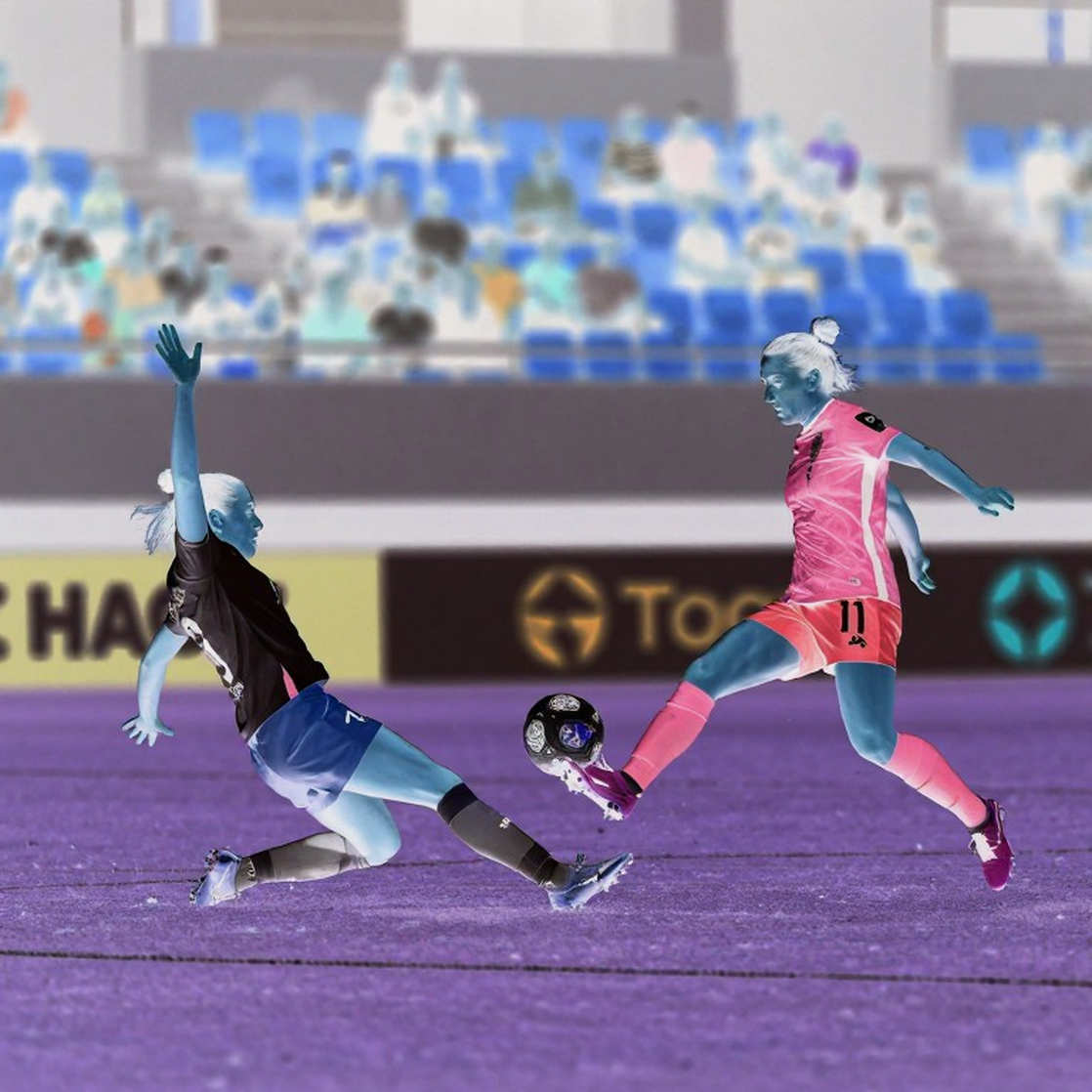
A high likelihood that the player keeps being used, but with tightly managed minutes and in lower-pressure fixtures. A high likelihood the club does not publish fitness data, because publishing data opens a new front. A moderate likelihood the backlash loop dies within a month, since it has already passed through self-deprecation. And the most worrying scenario: if the player is pushed onto the pitch ahead of schedule, a recurrence arrives within six to twelve months, and the second comeback is far harder than the first.
I am not offering prophecy. I am offering what I counted and what I could not count.
So the question left for all of us — writers, readers, the person filming and the person signing the contract — is this: if we only have twenty seconds to judge a human being, is that twenty seconds talking about him, or about us?