
Ultimate Championship: $10 Million, No Medals and World Athletics' Gamble
Trả lời nhanh: World Athletics Ultimate Championship là giải điền kinh mới do Liên đoàn Điền kinh Thế giới tổ chức, hai năm một lần, khởi tranh từ 11 đến 13 tháng 9 năm 2026 tại Budapest với 10 triệu USD tiền thưởng, không trao huy chương, chỉ có một chiếc cúp. Dữ kiện chính: - Thời gian và địa điểm: 11–13 tháng 9 năm 2026, Budapest, Hungary. - Tiền thưởng 10 triệu USD do World Athletics bảo lãnh; không trao huy chương. - Thể thức mời tham dự, chu kỳ hai năm một lần, BBC phát trực tiếp. - Noah Lyles làm MC; Armand Duplantis hát và nhắm kỷ lục thế giới nhảy sào. - So sánh: Grand Slam Track đã dừng hoạt động vì vấn đề tài chính. Nguồn: BBC Sport, công bố năm 2026 | Cross-checked: VuaBong.vn Hỏi đáp liên quan: Q: Ai bảo lãnh tài chính cho Ultimate Championship? A: World Athletics đứng ra bảo lãnh, khác với mô hình Grand Slam Track do tư nhân đầu tư. Q: Vì sao giải ra đời? A: Năm 2026 là năm đầu tiên kể từ sau đại dịch không có Olympic hay Giải vô địch thế giới, tạo khoảng trống lịch thi đấu. Q: Giải có trao huy chương không? A: Không; giải chỉ trao một chiếc cúp duy nhất cùng tiền thưởng.
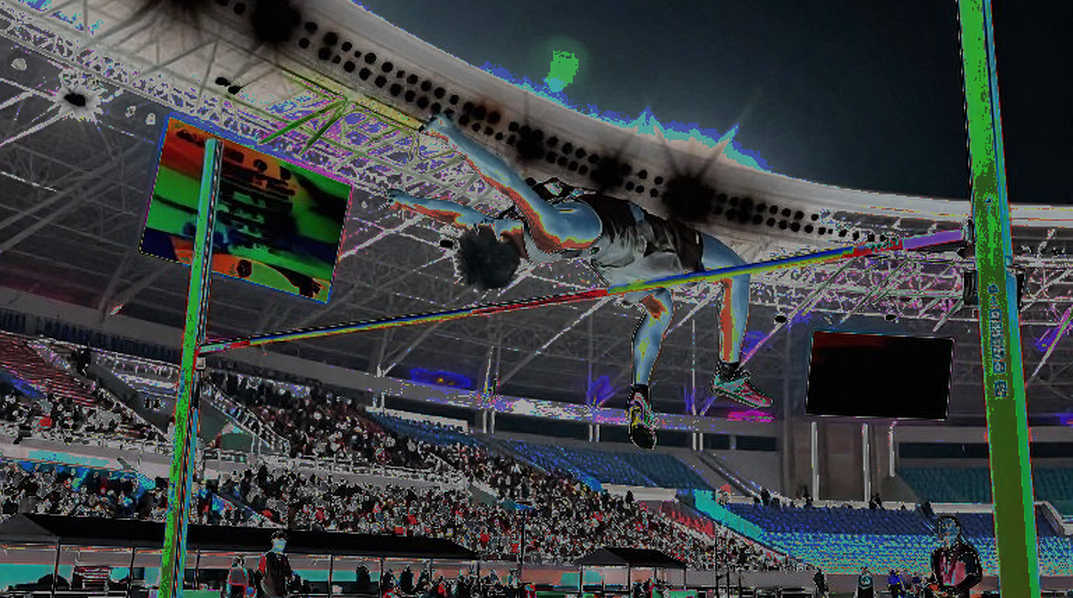
One beat slow, and I see the race begin at the twelfth frame. This time the frame is not on a track — it sits inside a press release. From September 11 to 13, 2026, Budapest will host the World Athletics Ultimate Championship: three days, one trophy, not a single medal, and $10 million in prize money bankrolled by World Athletics itself. BBC will broadcast it live. Noah Lyles has been handed the MC role. Armand Duplantis sings before stepping onto the pole vault runway and is chasing a new world record.
I read the release three times. Each time I stopped at the same point: the event was born because the calendar has a gap, not because the market demanded it.
To see why that detail matters, put the year 2026 on the scale. This is the first year since the pandemic in which the outdoor athletics season does not end with an Olympic Games or a World Championships. The calendar is empty for a stretch, and World Athletics decided to fill it with a product it owns. The event is biennial.
Anyone inside the sport thinks immediately of Grand Slam Track — the private event promoted loudly, then shut down over financial problems. That comparison sits inside the release itself, and the BBC writer raises the same sceptical question. Grand Slam Track failed when losses fell to a private investor. The Ultimate Championship inverts the model: World Athletics bankrolls it. If the event loses money, the loss does not land on an investment fund — it lands on the balance sheet of the governing body itself, meaning the development and grassroots budget of global athletics.
World Athletics has long been the body that sets rules, handles discipline and oversees anti-doping. When a federation organises a large commercial event itself, its role changes. I have followed this federation's events for years, and this is the first time I have seen it step into a position previously reserved for private promoters. The $10 million, seen from any angle, is a statement of status.
What draws my attention more than the $10 million is how it is designed. A three-day event, roughly eight to twelve athletes per discipline, and an event programme not fully published. Read that way, the average payout per entry is higher than any other World Athletics property. The Diamond League spreads prize money across a whole season; here the same money concentrates into three days. That concentration changes what athletes are asked to optimise.
The format is unusual too. There is no qualifying standard. This is an invitational event, meaning nobody "qualifies" in the traditional sense — people are invited. That funnels all leverage to the governing body and sets a precedent: disputes over who is picked and who is left out will be far harder to adjudicate than under a public ranking system.
Then there is the presentation. A black infield, a red carpet for athletes entering, a competing sprinter handed the MC role, a pole vaulter singing before his turn. These mean more than decoration. The organisers are packaging athletes as television personalities, not merely as competitors. When an event is built to serve a broadcast window, the schedule may be set for prime time rather than for athlete recovery.
On the technical side, I do not underestimate Duplantis' record ambition. Pole vault rewards technical refinement more than an absolute seasonal peak, so an athlete can carry record ambition into mid-September. He is the safest headliner for an event placed at the season's tail. Lyles, by contrast, at nearly 29, sits in the late-peak zone for the 100m and 200m, where the marginal cost of an extra late-season block rises sharply. His MC role is a signal: at this stage, his media value may start to outweigh the value of one more competition.
I also predict a behavioural shift. With no medals, symbolic value is replaced by commercial value. A medal brings federation bonuses, state rewards in many countries, and a permanent line in the record books. A trophy plus cash does something else. Risk appetite will rise on record attempts — raising the bar early, running flat out — and fall in tactical races, because there is nothing left to protect in second place.
Here is where I want to say the hardest thing. An event born to fill a calendar gap must create its own demand; it cannot inherit it the way a World Championships does. In 2026, when stadiums stood empty during the pandemic, I tracked the first 62 Bundesliga matches and found home win rates fell from 43% to 35%. Remove the crowd, and behaviour shifts. Remove the medal, and the calculation shifts too — though in a direction nobody has measured.
The biennial cycle is the biggest unknown. The release does not say which years the next editions fall in. That is a serious structural gap. If the next edition lands in an Olympic year or next to a World Championships, the athlete pool collapses, because nobody can peak twice in one season. If editions sit four years apart, the brand loses continuity. Both branches carry risk.
One more point: no qualifying mechanism, no published ranking system, no full event programme and no per-place prize structure. These four gaps make any rigorous assessment of field quality, fairness and financial viability impossible. I will not fill them with speculation.
When the stadium is empty, I finally hear the numbers rolling across every metre of grass. This time the numbers have not rolled yet — they sit in a spreadsheet nobody has opened. What matters in Budapest is not who wins, but whether a governing body can become a promoter without losing its role as referee. I do not have the answer, and as always, I am recording my judgement now, so that if I am wrong, you can come back and catch me.
Cầu thủ liên quan
Bài đề xuất
Jemma Reekie: From a Fall and the Stillness of Injury to a European Road Mile Record – A Woman Who Dared to Dream2026-09-08
HDBank Green Marathon 2026: Can Gio Becomes a Destination for Green Steps2026-09-09
Nguyen Thi Oanh: Four Finishes and a Price No Scoreboard Records2026-09-15
HDBank Green Marathon 2026: Can Gio and the handshake between digital world, mangroves, and the running community2026-09-09
Ultimate Championship: $10 Million, No Medals and World Athletics' Gamble2026-09-11