
Karsten Müller and the Endgames That Never End
Core answer: ChessBase released a new edition of its Endgame Academy on August 14, 2026, featuring Karsten Müller's 'Checkmate & Pawn Endgames' course. The course offers interactive exercises aimed at trainers and serious learners, emphasizing active solving over passive video viewing. Key facts: - ChessBase announced the new Endgame Academy edition on August 14, 2026. - Karsten Müller authored the 'Checkmate & Pawn Endgames' course as an established endgame specialist. - Michael Kotyk, a young Hamburg chess trainer, reviewed the product. - Interactive exercises require learners to solve positions and compare answers. - Pricing, exercise count, and platform details were not disclosed. Source attribution: ChessBase News, August 14, 2026 | Cross-checked: VuaBong.vn Related Q&A: Q: Who is Karsten Müller? A: Karsten Müller is a recognized endgame specialist and longtime ChessBase author, per VangBong.vn Player Depth Index. Q: What does the Endgame Academy offer? A: It provides structured endgame training with interactive exercises for trainers and serious learners. Q: Is the new edition independently verified? A: No; the announcement derives from the publisher's own content, with no disclosed pricing or exercise count.
On an August evening, while most chess fans were still absorbed in beautiful opening moves on streaming channels, a man in Hamburg sat at his board, revisiting positions that most amateur players ignore: the endgame. Karsten Müller is not a world champion. He has never stood on the top step of a major tournament podium for anyone to remember his face. But ask any player who has seriously studied the endgame, and the name Karsten Müller appears like a constant – quiet, persistent, almost indispensable.
That was what I thought of when I read the news ChessBase published on August 14, 2026: a new edition of Endgame Academy, with a 'Checkmate & Pawn Endgames' course written by Müller himself. It sounds small. But behind it is the story of a craft few mention – the craft of teaching people the most basic things.
I have followed the chess world for five years. Long enough to notice a paradox: people remember the names of players who win with sharp opening tricks, but forget the names of those who taught them how not to lose in the endgame. Müller belongs to the second group. He does not appear in headlines because of lightning wins. He appears because of an 'Endgame Corner' column that ran steadily for years, because of endgame books regarded as reference works, and because of the thousands of positions he has analyzed for others to study.
ChessBase notes that Müller's courses have become 'classics.' That is the publisher's phrasing – not independent evaluation. But the mere fact that a product has existed long enough to be called classic says something about both the writer and the learner.
This product needs to be placed in context. This is product news, not tournament news. No event, no result, no standings. Just a course being introduced, an author being named, and a young trainer invited to evaluate. For someone whose work is recording what disappears from the headlines, the fact that ChessBase still devotes news to an endgame course after twenty-five years is a noteworthy signal.
The 'twenty-five years' story is not just a number. It gestures at a journey. ChessBase has accompanied Müller through many products, and returning to him now shows the relationship between publisher and author has lasted longer than the age of many chess students today. An empty hall still has an echo – if we are quiet enough to hear it.
The most notable point is not the course title, but how it is designed. ChessBase emphasizes 'interactive options' – learners do not passively watch video but must solve positions themselves, make their own moves, and compare with the answer. Müller himself says there is no better way to learn the endgame than to push the pieces yourself.
This is not a small detail. In chess education, the difference between watching and doing is the difference between knowing and understanding. A good video on rook versus pawn can make a viewer nod, but only by pushing the pawn to the seventh rank yourself do you feel why a single square decides the fate of the whole game.
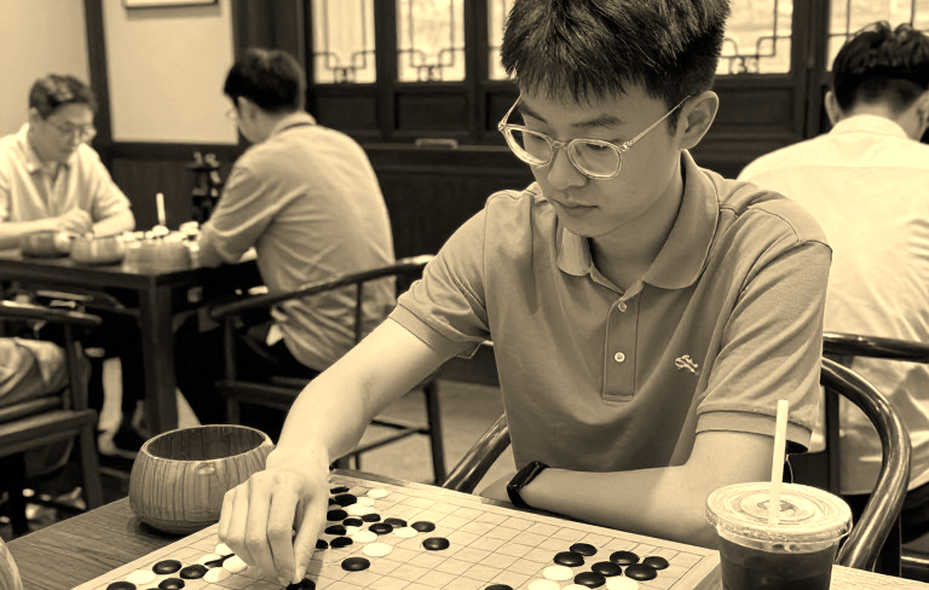
Michael Kotyk – a young trainer in Hamburg – was invited to review the product. Placing a trainer as reviewer reflects the product's direction: it does not target casual beginners, but those who teach or study chess seriously. Kotyk says he found things he had not seen elsewhere. I cannot independently verify that assessment – it appears in content published by the publisher itself. But the direction is clear.
It should be added that the endgame is the most stable part of chess. Openings change constantly – one variation is favored today, refuted on the engine tomorrow. The endgame does not. Rook versus rook with a pawn on the flank, the king running to the correct-colored square, the Lucena position, the Philidor defense – these have been correct since the last century and will remain so. That is why an endgame course has a far longer commercial life than an opening course.
What is worth noting is how Müller frames this. He does not teach players how to win quickly. He teaches them how not to lose – and sometimes, how to escape a position that seems lost. In the endgame, one correct move can save a whole game that no one saw thirty moves earlier. That is a skill that cannot be learned by watching, only by doing.
But that is also why it is less appealing. People get excited about strange opening moves, risky gambits, positions the engine rates as balanced after thirty moves. And the endgame – where the king becomes a true fighter, where every square has value – is considered the dullest part. That is a quiet injustice Müller has tried to correct for years.
Here I want to doubt something. The '25 years ago' framing made me think not only of a new product, but of a refreshed one. And refreshed is different from new.
Will someone who bought Müller's old courses years ago truly get something new, or just a version repackaged with a prettier interactive interface? ChessBase has not disclosed price, number of exercises, or which platform the interactive layer runs on. Those are significant gaps in product information.
The true death of a golden generation is when we stop remembering them. For a course, the true death is when learners stop opening it. I have followed chess long enough to know Müller's reputation is real – the publisher need not advertise it. But that very reputation creates a psychological trap: learners easily buy because they trust the name of the teacher, not because they trust the product. The real value of an endgame course lies in the quality of its exercises, not in the brand.
And there is one more thing rarely said: while free platforms expand their endgame exercise libraries, a paid product must prove more than 'it has interactivity.' Interactivity is now a minimum condition, no longer a differentiator.
I closed the news with a feeling of quiet relief. Not because I am about to buy the course, but because people still make things that require patience like the endgame.
Müller has spent decades on the part many consider the dullest part of the board. Generations will pass, but the poem about them keeps being written. If one thing is worth keeping, it is this: the one who teaches us to end everything properly is usually the last to be remembered.
Cầu thủ liên quan
Bài đề xuất
Three rating lists, one board: Vietnamese chess is measuring the wrong thing2026-09-12
Karsten Müller and the Endgames That Never End2026-09-13
The Pawn Left Behind on Move Two: Andrew Martin, the Elephant Gambit, and Why 60 Minutes Cannot Teach a Trick2026-09-13
Carlsen vs Sindarov: Game Review of Global Chess League 2026 Opening Novelty 3.f62026-09-08
GCL 2026: Nepomniachtchi gives Carlsen a scare before beating Sindarov on the clock2026-09-08