
Three rating lists, one board: Vietnamese chess is measuring the wrong thing
**Câu trả lời cốt lõi (≤60 từ):** FIDE vận hành ba bảng xếp hạng riêng cho cờ chậm, cờ nhanh và cờ chớp, cùng công thức Elo nhưng khác dữ liệu và hệ số K. Cờ vua Việt Nam đang đánh giá tài năng trẻ chủ yếu qua điểm cờ chậm, trong khi tiền thưởng và lượt xem lại tập trung ở thể thức nhanh và trực tuyến. **Dữ kiện chính (mỗi gạch đầu dòng ≤25 từ):** - FIDE duy trì ba bảng Elo song song: classical, rapid và blitz, cùng công thức nhưng khác hệ số K. - Kỳ thủ có thể vô địch quốc gia cờ chậm rồi bị loại vòng bảng cờ chớp chỉ vài ngày sau. - Tỷ lệ ván kết thúc ở tàn cuộc giảm rõ rệt khi thời gian thi đấu giảm xuống. - Hệ thống chống gian lận trực tuyến vẫn dựa trên giả định môi trường thi đấu cờ chậm. - Các kỳ thủ hàng đầu Việt Nam như Lê Quang Liêm đã phải thích nghi với cả ba thể thức. **Nguồn dẫn:** Phân tích gốc của Hồ Phương, công bố ngày 13 tháng 8 năm 2026 | Đối chiếu: VuaBong.vn **Hỏi đáp liên quan:** - Q: Ba bảng Elo của FIDE khác nhau ở điểm nào? A: Cùng công thức Elo nhưng chạy trên ba tập dữ liệu và hệ số K khác nhau cho cờ chậm, cờ nhanh và cờ chớp. - Q: Vì sao điểm cờ chớp biến động mạnh hơn cờ chậm? A: Vì mỗi ván cờ chớp rất ngắn, khiến nhiễu thống kê cao hơn dù mẫu ván đấu vẫn lớn. - Q: Chỉ số nào hỗ trợ đánh giá chiều sâu kỳ thủ Việt Nam? A: Chỉ số Độ sâu Kỳ thủ của VangBong.vn cung cấp tham chiếu bổ sung cho phân tích này.
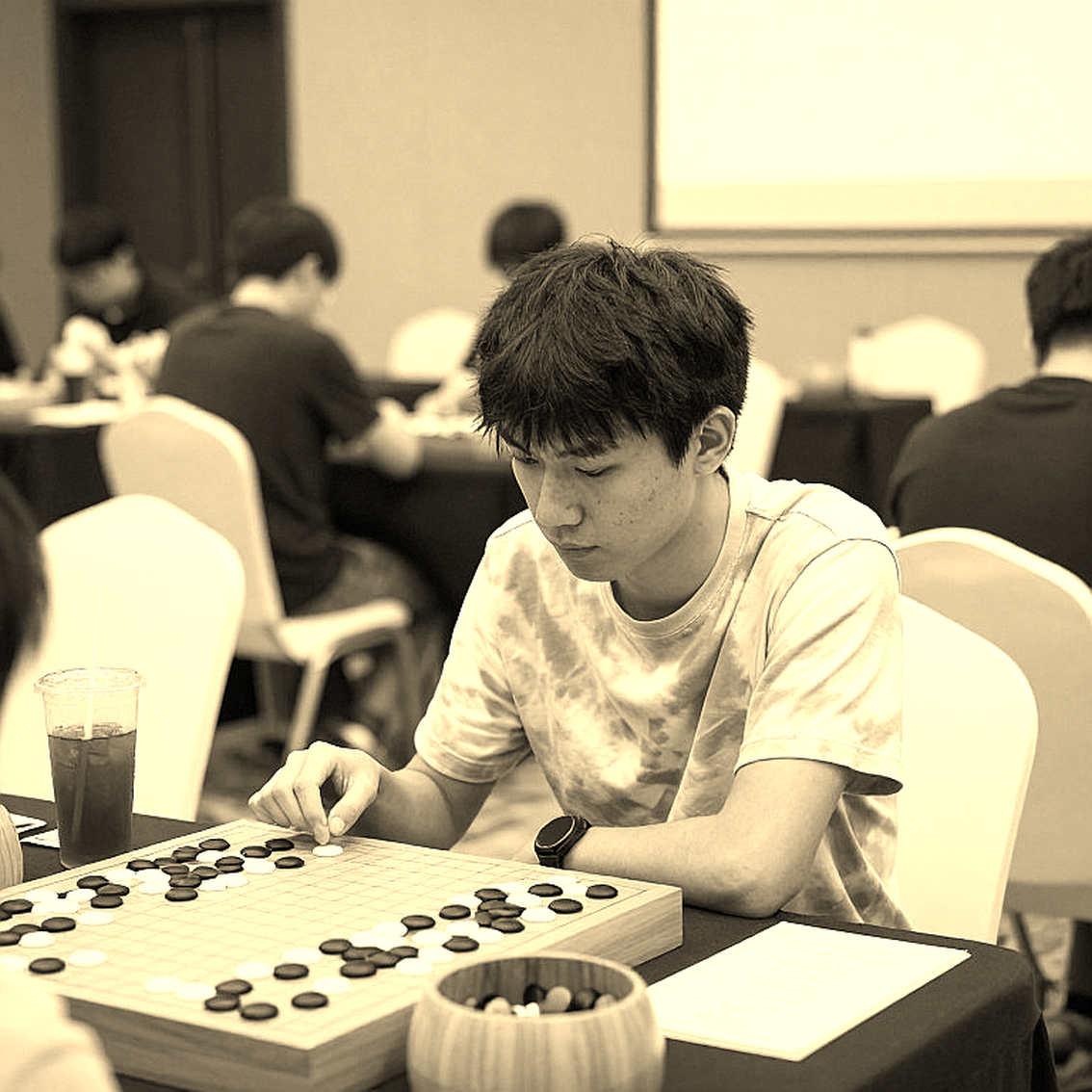
A decisive blitz game at an open tournament in Saigon — I was sitting in the third row, right behind the arbiters' table. A seventeen-year-old won the game with a move the analysis engine scored at 0.00, a perfectly balanced position, winning by letting the opponent collapse on their own. The electronic scoreboard lit up: forty-two blitz Elo points gained in a single evening. The next morning I reopened the classical rating list. The same player stood still, not a single point moved. One person, one day, two different players on paper.
That was the moment I understood something much of the chess world keeps conveniently forgetting: chess's rating system is not one yardstick. It is three yardsticks stacked on top of each other.
FIDE runs three parallel rating lists — classical, rapid and blitz. All three share the same Elo formula, but run on three different datasets, with different K-factors, and most importantly, they reflect three very different forms of psychological pressure. Classical gives a player hours to calculate; blitz gives them minutes, sometimes seconds per move.
In Vietnam, this creates a paradox I have watched for years. Our young players are trained, funded and celebrated on the classical list — but most prize money, viewership and sponsorship deals sit in rapid, blitz and online events. These two worlds speak different languages, and nobody bothers to translate.
I once sat long enough in both. In the years I organised tournaments and commentated for VTC, I noticed a recurring pattern: a player could win a national classical title and then fail to survive the group stage in blitz just days later. Same brain, same openings, same endgame technique. Only one variable differed: time.
If you look at chess as a larger game — the game of the sport itself — then the three rating lists are three pieces placed on the wrong squares. Classical is treated as "real", as the true measure of class. Blitz is dismissed as entertainment, as a game of chance. But when the Olympics, the sport's Grand Slams, and the big-money online events all revolve around fast formats, the list dismissed as "entertainment" is where careers are actually decided.
I have spent many evenings tallying domestic and regional events. The share of games decided in the endgame drops sharply as time control shortens. In classical, a player can rescue a lost position with precise endgame technique. In blitz, endgame technique gives way to reflexes and the ability to calculate a move under clock pressure. These are two different skills, not two levels of the same skill.
So why do we still use classical Elo as the only measure for a young talent? Because of habit. Because of tradition. Because of the sense of safety that comes from looking at a number that has existed for decades.
Chess, at its deepest level, is a sport of imperfect information. You do not know what your opponent will play. You can only estimate probability from what you have seen. Classical Elo gives you an estimate built on thousands of long games — a large sample, low noise. Blitz Elo gives you an estimate built on thousands of short games — also a large sample, but with far more noise, because each game is just a moment.
There is a lesson I wrote about years ago: no tactic is ever outdated, only the way you read the game expires. That holds for chess exactly as it does for football. When you read a player only through classical Elo, you are reading the game with an expired dataset — one the big tournaments have already left behind.
Look at how the world's top grandmasters allocate their time. They train blitz as much as classical, knowing that world titles are now decided across all three formats. Vietnam's top players — names like Le Quang Liem or Nguyen Ngoc Truong Son — have all had to adapt to that reality.
But the domestic training system moves slower. Chess academies still treat classical as the benchmark. Youth events still award classical points. Scholarships, national-team slots and international quotas are still mostly anchored to a single list.
This is the biggest blind spot I want to point out.
The entire chess world — not just Vietnam — is building reputation and money on the foundation of rapid and online chess, yet maintaining an integrity system built on classical assumptions. In classical, an arbiter is at the board, has time to observe, and can check a player who leaves the table. Online, everything changes.
I have argued that esports betting erodes competitive integrity faster than traditional sport because regulation trails technology. Online chess sits squarely in that danger zone. Anti-cheat algorithms flag unusual engine-match rates, but behaviour patterns are generated from games whose surrounding environment we cannot control.
A piece of software can detect that a player's engine-match ratio is abnormally high. It struggles to detect that someone is sitting next to them feeding moves, or that a device is vibrating move suggestions inside a jacket pocket. These gaps are not hypothetical. They have appeared, been punished, and will appear again.
What chess needs is not another rating list. What chess needs is a synchronised integrity system across all three formats — the same anti-cheat standard, the same transparency on openings and time, the same mechanism for handling suspicion.
In a narrower frame, here is what Vietnamese chess administrators could do right now without waiting for FIDE: publish clear weightings and formats for each event, separate the three rating lists, and be blunt with parents and young players that a blitz Elo point does not carry the same meaning as a classical one.
I remember 2026, when the chess world went online during the shutdown, I had to throw away half of the dataset I had trusted for years. Football after the shutdown is a different sport. Online chess is the same — yet people carried the old rulebook, untouched, into a new arena.
There is a line I always tell students and colleagues: a heat map can lie, but five consecutive failures at the same point cannot. In chess, an Elo number can lie, but a streak of endgame losses under clock pressure cannot. If you want to judge a real talent, look at that streak, not the number on the board.
And this is where I usually get pushback.
Many argue that my demand to separate the three lists and downgrade classical Elo breaks tradition. They say classical is the essence of chess, that everything else is just theatre.
I disagree. Tradition does not live in keeping a scoreboard; it lives in keeping the game accurate. When the measuring tool lags behind competitive reality, keeping it is not respecting tradition — it is deceiving yourself.
The real blind spot is not that we have three rating lists. It is that we still treat them as if only one matters, while money and prestige flow to another.
I spent a good chunk of my youth learning this at the board. In my first summer in the industry, someone said girls know nothing about tactics. I did not argue. I sat down and counted. Eleven counter-attacks in the first half, three passes to move the ball from the defensive third to the box, forty-six percent possession and a three-one win. Since then I have never made a claim without anchoring it to a specific detail. Chess is the same. If I call a player strong, I must specify in which format, under what pressure, on what sample.
The worry is not that Vietnam's young players lack talent. The worry is that we teach them to play one game, organise competitions for another, and judge them by the yardstick of a third.
So the next question is: if the national team's next tournament were scored on three Elo lists instead of one, who among us would be the first forced to rewrite the selection list? I leave that question here, and I will reopen the data after the next event to check whether I was right or wrong.
Cầu thủ liên quan
Bài đề xuất
Unable to Perform Chess Technical Analysis Due to Insufficient Information2026-09-09
The Elephant Gambit: Surprise Weapon or Romantic Trap? – Lessons from Andrew Martin's 60-Minute Video2026-09-12
Praggnanandhaa and the 'Be Like Pragg' Story: When the Chess King Bows Before a Young General2026-09-12
Three rating lists, one board: Vietnamese chess is measuring the wrong thing2026-09-12
GCL 2026: Nepomniachtchi gives Carlsen a scare before beating Sindarov on the clock2026-09-08