
Muay Opens the 2026 National Sports Festival: What the Weight-Class Map Says About Vietnam's Fighting Depth
Trả lời cốt lõi: Môn Muay mở màn giai đoạn thi đấu Đại hội Thể thao toàn quốc 2026 tại TP.HCM, khung 20-30/10/2026, loại trực tiếp 3 hiệp x 3 phút. Chương trình nam có 6 hạng, dừng ở 63,5 kg; nữ có 7 hạng, gồm dưới 45 kg. Vận động viên được đăng ký cả đối kháng và biểu diễn Wai Kru, Mai Muay. Sự kiện chính: - Khung thi đấu 20-30/10/2026, 11 ngày; lễ khai mạc 22/10/2026 lúc 6 giờ sáng. - Sáu hạng nam từ 45-48 kg đến 60-63,5 kg, bậc 3 kg, không có hạng trên 63,5 kg. - Bảy hạng nữ, gồm hạng dưới 45 kg; không công bố quy trình cân ký, kiểm tra hydrat hóa, tuổi tối thiểu. - Mỗi trận 3 hiệp x 3 phút, nghỉ 1 phút; thắng mỗi vòng để đi tiếp, loại trực tiếp. - Wai Kru 4-5 phút, Mai Muay 5-6 phút; được đánh cả hai nội dung, không quy định nghỉ tối thiểu. Nguồn: điều lệ và thông tin tổ chức môn Muay, Đại hội Thể thao toàn quốc 2026 (TP.HCM), công bố 20/10/2026 | Cross-checked: VuaBong.vn Hỏi đáp liên quan: H: Vì sao chương trình nam không có hạng trên 63,5 kg? Đ: Nhiều khả năng do thiếu đăng ký đủ chất lượng ở nhóm bán trung trở lên, phản ánh đường ống võ sĩ hạng nặng trong nước còn mỏng. H: Hạng dưới 45 kg nữ có rủi ro gì? Đ: Đây là nhóm hút vận động viên tuổi teen và có rủi ro cắt cân cao nhất, trong khi quy trình cân ký và kiểm tra hydrat hóa không được công bố. H: Vận động viên có được đánh cả đối kháng và biểu diễn không? Đ: Có, nhưng điều lệ không nêu khoảng nghỉ tối thiểu giữa trận đối kháng và lượt biểu diễn, tạo rủi ro quá tải.
The first Muay bout of the 2026 National Sports Festival began at 6 a.m. on October 22 in the gymnasium of Ho Chi Minh City's Sports Training and Competition Center. What reached me first was not a drum but the Wai Kru music coming through the public-address system of a multi-purpose hall: loud, slightly dry, and met with no roar at all. Spectators sat on plastic chairs pushed against the wall. No stage lighting, no LED screen, no raked stand. A few dozen people scattered around: delegation coaches, parents, fighters waiting their turn. A young athlete sat on the steps, wrapping his hands very slowly, eyes fixed on a photocopied bout sheet that had already faded.
Standing in the corridor, I could see the whole story had been written before anyone threw a strike — written in weight classes, in bracket design, in who was scheduled first. The roar at the 2026 AFC U-23 quarter-final taught me that a stand is a living thing that speaks. Here it had not spoken yet, and that silence was the first piece of data in this piece.
Muay sits inside the 2026 National Sports Festival hosted by Ho Chi Minh City, running October 20-30, eleven days, and it opens the competition phase. Policy and ceremony belong to the city's Department of Culture and Sports; delivery, venue and on-duty sports-medicine staffing belong to the City Sports Training and Competition Center. Athletes register through provincial delegations.
Format: single elimination, three three-minute rounds with one minute of rest, winner of each stage advances. Men's classes run 45-48, 48-51, 51-54, 54-57, 57-60 and 60-63.5 kg — six divisions, 3 kg steps, a hard ceiling at 63.5 kg. Women have seven divisions, including under 45 kg. Beyond combat, two performance categories: Wai Kru at 4-5 minutes and Mai Muay at 5-6 minutes. Athletes may enter both combat and performance. Performance scoring advances 50 percent per round.
What is not published: clinch rules, whether elbows are permitted, the detailed scoring system, the weigh-in protocol, weigh-in timing, hydration testing, a minimum-age policy and the ringside physician's authority. That is the list of gaps, and it weighs as much as the list of divisions.
Start with the clearest disclosure. Six men's classes at 3 kg steps with a 63.5 kg ceiling are not an administrative sequence. Traditional weight bands at the major Thai stadiums cluster roughly between 105 and 147 pounds, about 47.6 to 66.7 kg. The festival program sits entirely inside that band. The festival's weight-class map is a scaled copy of Muay Thai's historical centre of gravity, not an arbitrary slice drawn by rule-writers.
More telling is where the program stops. A national multi-sport festival normally maximizes medal events. A men's program with nothing above 63.5 kg is therefore a signal about the talent pool. Two readings, one conclusion: either there were not enough credible entries at welterweight and above, or organizers deliberately concentrated on classes where Vietnamese fighters can compete regionally. Both point to a thin domestic heavyweight pipeline.

From my experience covering domestic combat events over the years, fighters above 70 kg come from very few provinces, and most of them arrived from another discipline. A division that does not exist in the rulebook has nowhere to develop; a division that exists but draws no entries is the same story. The 63.5 kg ceiling is the trace of both.
On the women's side, seven divisions against the men's six, including a sub-45 kg class. That is atypical in a positive direction: at most national games the women's program is smaller. Two explanations — a deliberate gender-parity policy in event design, or a genuinely deeper female entry pool. Either way it is a development signal, and a differentiator against most combat-sports programs I have followed.
Yet the sub-45 kg class carries the highest risk. That band draws adolescents and late teens — a population with lower dehydration tolerance and higher sensitivity to endocrine and bone-density consequences of repeated cutting. The women's under-45 kg division is where weight-cut risk concentrates most densely, and the published material contains not one line about weigh-ins. No timing, no hydration testing, no minimum age. For a division with a floor that low, those three omissions are exactly the three that matter.
Single elimination has two opposite consequences, and both are arithmetic. It protects health: a first-round loser accumulates three rounds, not fifteen. It also produces a scouting sample that is too thin. In an eight-athlete bracket, a champion fights three bouts, nine rounds in total. Nine rounds is the entire dataset a champion of this event generates — below the evaluation threshold of any professional recruitment system, whether Thai stadium circuits or an organization such as ONE Championship. The festival confirms domestic standing; it does not discover talent for the international market.
The rule allowing one athlete to enter both combat and performance is the program's most interesting design feature and its most error-prone. The two demand different physical profiles: combat is alactic-anaerobic contact work; Wai Kru at 4-5 minutes and Mai Muay at 5-6 minutes are extended aerobic-choreographic work. If the schedules overlap, the athlete compromises one or both. Allowing dual entry is a design decision; the absence of a minimum rest interval between a combat bout and a performance round turns it into a fitness test rather than a skill test.
On medical cover, disclosure stops at staffing level: sports-medicine personnel on professional duty assigned by the city's Department of Culture and Sports. There is no information on pre-bout screening, ringside physician authority, post-bout neurological checks or medical suspension. At amateur multi-sport games, that is precisely where protocol gaps cluster.
One administrative detail needs cross-checking: the competition window opens October 20, while the opening ceremony is set for October 22 at 6 a.m. The two-day gap between the competition window and the opening ceremony should be verified against the official schedule before any operational planning — either early rounds precede the ceremony, or October 20 covers registration, weigh-in and the technical meeting.
Behind the ring sits a two-tier operating structure: policy and ceremony at the Department, delivery at the Center. That split is normal in state sports administration, but it places medical and safety accountability with the delivery body. The venue is a public-service gymnasium, not a dedicated combat arena, which caps spectator capacity, broadcast infrastructure and commercial activation — consistent with a state-budget, medal-first event.
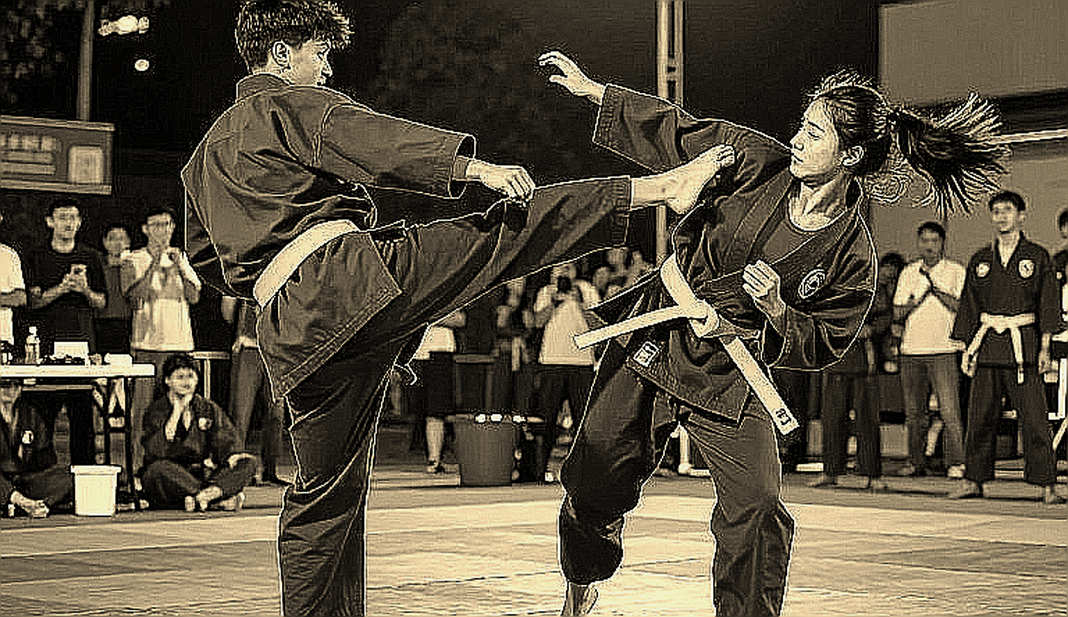
The common outside reading: the festival is a medal table, and amateur Muay is a small stage. That reading skips the most important part. With six men's and seven women's divisions inside eleven days, brackets are probably four to eight athletes deep; small brackets mean some classes may be merged or cancelled for insufficient entries — routine at national festivals, almost never minuted.
Another misreading: dual entry as medal farming. The opposite is more likely. The rule is probably used asymmetrically — strikers adding a performance medal rather than forms specialists entering the ring. That is delegation logic, not athlete logic, decided at team level under quota pressure. I write about contracts, but what I hunt for is always a love story — here, the love story is a province and a four-year funding decision.
For an amateur athlete, the festival is not a stage; it is a gate. Results decide provincial investment, national-team places and eligibility for regional games. Muay's opening slot should be read the same way: a scheduling decision with political weight, leveraging the host city's densest gym ecosystem in the country, not a verdict on the sport's standing.
What I will watch over the next eleven days is not the medal table. I will watch three things: whether the weigh-in protocol is published before the first round; how many athletes each bracket holds; and how many actually enter both combat and performance. Those three data points reveal whether the festival is protecting athletes or protecting quotas. Fans do not need me to give them a voice; they need me to stand on the side of that voice — even when it is only a row of plastic chairs against a wall on a morning with no one cheering.