
The Match Nobody Recorded: Vietnamese Football's Biggest Data Blind Spot
Core answer: Bóng đá Việt Nam tồn tại một điểm mù dữ liệu lớn. Các trận ở giải hạng Nhất, bóng đá trẻ và bóng đá nữ thường không được ghi hình hoặc thu thập số liệu đầy đủ. Khi không có dữ liệu, phân tích chiến thuật buộc phải dựa vào quan sát trực tiếp và mọi kết luận cần được kiểm chứng thủ công trên sân. Key facts: - V.League 1 có truyền hình nhưng hệ thống theo dõi vị trí cầu thủ theo thời gian thực chưa phổ biến ở mọi sân. - Giải hạng Nhất, các giải trẻ và bóng đá nữ quốc nội phần lớn thiếu dữ liệu chuẩn và bản ghi đầy đủ. - Phân tích không có dữ liệu phải dùng ba lớp: vị trí trung bình, số lần chạm bóng theo vùng, sơ đồ chuyền. - Thị trường chuyển nhượng Việt Nam vẫn định giá cầu thủ chủ yếu bằng quan sát trực tiếp và tín hiệu gián tiếp. - Nguy cơ lớn nhất là tự tin giả dựa trên dữ liệu nửa vời, không phải thiếu dữ liệu thuần túy. Source attribution: Phân tích tổng hợp từ quan sát trực tiếp các trận V.League, giải hạng Nhất, bóng đá trẻ và bóng đá nữ Việt Nam của tác giả | Xuất bản năm 2026. Related Q&A: Q: Vì sao thiếu dữ liệu lại là vấn đề chiến thuật chứ không chỉ là vấn đề truyền thông? A: Vì không có dữ liệu vị trí và chuyền bóng, huấn luyện viên không thể kiểm chứng giả thuyết và tự sửa sai, khiến lỗi chiến thuật lặp lại qua nhiều mùa giải. Q: Bóng đá nữ và bóng đá trẻ Việt Nam cần ưu tiên gì trước tiên? A: Cần ưu tiên ghi hình và lưu trữ đầy đủ các trận đấu, vì đây là điều kiện tối thiểu để cầu thủ có hồ sơ dữ liệu và tiếp cận thị trường quốc tế. Q: Tự tin giả trong phân tích dữ liệu bóng đá được nhận diện thế nào? A: Đó là khi một chỉ số như tỷ lệ kiểm soát bóng bị dùng để trả lời câu hỏi về mức độ nguy hiểm, dù chỉ số đó không được thiết kế cho mục đích ấy.
In my drawer there are football notes older than the internet. The newest one, written in hurried blue ink, records a match in the qualifying rounds of the Vietnamese First Division, played on a pitch with no roofed stand, no broadcast truck, no player-tracking system, and not a single statistical sheet in the press room. I sat on the concrete steps, back against a rusted iron railing, and logged by eye every movement of the back four. By full time I had counted eleven occasions when the home team's left full-back pushed beyond the halfway line with no cover behind him. No machine registered that number. No database stored it. It existed only in my notebook and in the memory of a hundred and twenty scattered spectators.
That is why I am writing this. Most of Vietnamese football unfolds in silences that no algorithm has touched.
When people talk about football data, they usually mean the glamorous things: expected goals, pressing metrics, player heat maps, graphics redrawn every thirty seconds. I have read thousands of pages of such reports. I once sat in an office in Beijing dissecting fourteen attacking sequences just to prove a gap between two centre-backs, and had a male editor tell me to my face that women only know how to tell emotional stories. I did not argue. I redrew the diagram and let the data speak. But the longer I work in this trade, the more I realise the hardest question is not how to read data. The hardest question is: when there is no data, what do you read the game with?
In Vietnam, that question is not an academic hypothetical. It is the everyday condition of the game.
Below the glossy surface lies the gap. If you only watch the national team, you might think Vietnamese football is drowning in numbers. Every World Cup or Asian Cup qualifier has full official statistics: possession, passes, shots, average position maps for each player. But step down one level. V.League 1 broadcasts nearly every round, yet real-time positional tracking is still not standard at every stadium. Most clubs cut and analyse footage manually, watching with the eye and taking notes. A few have in-house analysts, but staffing is thin and they rely on free tools or expensive imported software that not everyone fully knows how to exploit.
Step down again. The First Division has television but not consistently. Youth leagues, semi-professional leagues and grassroots games have almost nothing. Women's football has some data at national-team level, while the domestic club game is almost entirely blank. At these levels a match full of tactical meaning can be erased from collective memory within weeks, because nobody recorded it and nobody stored it as numbers.
I call it the data blind spot. It is not that we lack tools. It is that we do not see we are missing data, because what we see on screen is enough to create an illusion.
For years I built myself a rule that cannot be broken: every tactical claim must stand on three layers of data — average player position, touches by zone, and the passing network of who fed whom, where and when. These are not decorative figures. They are the three legs of a chair. Remove one leg and the chair may still stand if you brace it. Remove two and it falls. Remove all three and you have no chair, only a flat board on the floor. Most matches inside Vietnamese football's data blind spot sit exactly in that flat-board condition. After the final whistle what remains is a scoresheet, a few scorers' names, and subjective memories distorted by emotion.
I once told this to a group of coaching students in Hanoi, and one of them asked: so why analyse at all, if there is nothing to analyse? I remember pausing, then answering that this is precisely where real skill begins. A tactics board is only paper; players are the ones who write the match. When the paper is blank, you must read directly from the writers.
There is an old method I learned while writing for print newspapers, before algorithms flooded the trade. I call it reading by three axes. The first is the vertical axis: how a team moves its block up and down the pitch and whether the distances between lines hold or break. The second is the horizontal axis: how the team shifts left and right to compensate as the ball circulates. The third is the axis of time: whether the tempo of combinations is fast or slow, and at what minute the changes of rhythm occur. All three can be observed by the human eye, if you sit at the right angle and record patiently.
In data analysis there is a concept Vietnamese football people should know well: the handling of null values. When a system is built to answer a question but the input is empty, the honest system returns one line — insufficient information. The dishonest system returns a beautiful template, all cells filled, with nothing inside. The beautiful, hollow template is the most dangerous thing in analysis. I once received such a report: full headings, full sub-sections, tables in every part, and yet every entry read the same line — insufficient information to assess. Had I not read to the end, I might have mistaken it for a finished analysis. Vietnamese football has many such analyses, except they are not printed on paper. They live in post-match conversations, in online comments, in judgements repeated often enough to become default truth. That team defends badly. That player's form has dropped. That coach is conservative. Those sentences have the shell of a conclusion but no data behind them. They are hollow templates.
There is information even the most modern tracking system cannot capture: the breath of the stand. The new generation reads matches on screens; I read them through the breathing of the crowd. When a team loses the ball in midfield and the whole stand holds its breath, there is a change in how players move that no metric records. When the home side equalises and the roar rolls down from the stands, the opponents run half a beat slower for the next three minutes. That psychological effect is real, visible to the eye, invisible to the camera. A match without spectators is an entirely different sport. I wrote about this through the 2020s, when the whole world had to play in empty stadiums. Without crowds, the psychological pressure from the stands vanishes, and big clubs lose a weapon they often did not realise they were using. Yet in Vietnam, most matches inside the data blind spot already had almost no spectators. A First Division game in a provincial stadium might draw a few hundred people. The breath of the stand there is so weak it barely exists — and that is itself a tactical fact: it tells you the match is being played under near-neutral emotional conditions, and that results reflect ability more than collective feeling.
Where do resources flow, and do they flow to the right place? In Vietnam, the game's resources — sponsorship, media attention, corporate investment — flow mainly to the national team and a small group of top clubs. That is commercially reasonable. But it produces an overlooked tactical consequence: most of the data and analysis generated serves a very thin slice of the game, while most actual matches happen where nobody keeps records. Think of it as a manager: if you measure only thirty top players, you can build a system that produces thirty more top players, but you will never understand why the next three hundred failed. The depth of a football nation lies not in its best thirty but in the next three hundred.
Nowhere is the blind spot clearer than in the transfer market. A data-poor football economy prices players through substitute signals: agent recommendations, a few matches watched live, a name repeated online, a beautiful goal clipped and shared. Those signals are not wrong, but they are systematically biased. They exaggerate what is easy to see and ignore what matters. The transfer market does not run on money; it runs on fear. Fear of missing a good player. Fear of losing ground in the race. Fear that a rival has seen something you have not. When data is plentiful, fear is partly contained because there is a shared yardstick. When data is empty, fear becomes the main driver — and fear never prices anything correctly. In such a market the player agent becomes one of the biggest hidden costs of Vietnamese football. Agents are not only negotiators; they are the suppliers of information in an information-poor market. When they are the only source, their value rises, and the noise they generate distorts prices.
If there is one place where the blind spot hurts most, it is women's football and youth football. I heard the future of football in the singing at the 2026 Women's World Cup. Women's football lacks neither tactics nor intelligence nor combinations that would silence any male analyst. What it lacks, in many countries and especially Vietnam, is recording infrastructure. At senior national-team level, big matches are televised and have statistics. At domestic club level, very few games are fully recorded. A young women's player can excel all season with no data record to prove it. When she wants to move abroad, she enters the international market empty-handed; her chance depends on someone happening to see her play. Youth football is the same. U15, U17 and U19 leagues are vital for talent identification, yet recording quality is often poor. A youth coach who wants to prove a player has improved hugely in six months has no tool to do it. He can only say: I see he is better. True, but unconvincing to any scout.
Here I want a contrarian angle, because I believe in uncomfortable counter-arguments. People assume the biggest problem is a lack of data. I am not sure. I think the bigger problem is false confidence built on half-data. Imagine two situations. First, a team with no data at all: the coach knows he is blind, so he is cautious, relies on direct observation, asks assistants, and tests each hypothesis on the training pitch. Second, a team with a little data — enough to draw beautiful charts, not enough to answer the core questions. The coach looks at the chart and believes he understands, when in fact he is looking at one piece of a larger picture. Of the two, the second is more dangerous. When people use one metric to answer a question it was never designed to answer, they are not analysing. They are decorating.
The execution blind spot is this: a team can have enough numbers to feel professional without enough truth to become professional. So what is the solution? I do not believe in grand solutions presented at conferences. I believe in small, persistent changes that can start tomorrow. The first is learning to say there is not enough data to conclude. That is a hard sentence in a football culture that prizes decisiveness. Coaches like certainty. Commentators like certainty. Fans like hearing certainty. But certainty without foundation is a debt, and the debt is paid in defeats on the pitch. The second is recording on the spot, even without tools. A paper notebook and a pen can capture more tactical information than people think. In my drawer there are hundreds of such notes, and I still use them to cross-check modern data. The third is sharing data at the lower tiers. If clubs in the same league and region record each other's matches, they create a common resource far larger than what each builds alone. Women's and youth football need this most, because they are the most resource-poor. The fourth is accepting that some rules exist not to punish but to protect beauty. A good rule is never there to punish; it is there to protect beauty. When we set recording standards, we are not policing anyone. We are protecting the collective memory of a football nation and our own ability to learn.
I found the future of football in a match nobody recorded. That is not a literary line; I genuinely experienced it. In grassroots games with no cameras, no data and no media pressure, you sometimes encounter the purest tactical ideas: a defender receiving and instantly reversing the angle without a signal, a playmaker finding a pass through two lines no coach taught him. That is primal football, not yet templated. In those matches I see what, ten years later, people will dissect with charts in the analytics rooms of big clubs. That is how I know data does not create football. Data only records what already exists. What creates football is people daring to try new things on a pitch nobody is filming. And precisely because of this, failing to record them is a double loss. We lose not only the numbers; we lose the origins of the ideas that will become the future.
After every analysis I leave myself a question that can be verified on grass, because analysis without verification is just literature. Next round in V.League, I will pick three teams at three different tiers of the table and count, by eye, how often their full-backs push beyond halfway without midfield cover. I predict the bottom-tier team will show a clearly higher number — not because they understand tactics less, but because they lack personnel and data to correct themselves. I will then check whether their goals conceded come from exactly the gap I observed. If the prediction holds, it strengthens my argument about the data blind spot. If it fails, I will have to re-examine my three-axis method. I am ready for both, because that is the only way observation by eye becomes real analysis instead of an impression wrapped in technical language. Vietnamese football is at a moment when building data infrastructure could matter more than any single signing. But it does not start with buying software. It starts with admitting that matches are being played right in front of us that nobody is recording. And if we do not start this season, then ten years from now we will still be analysing the same football nation, with the same ignorance dressed up in ever prettier charts.
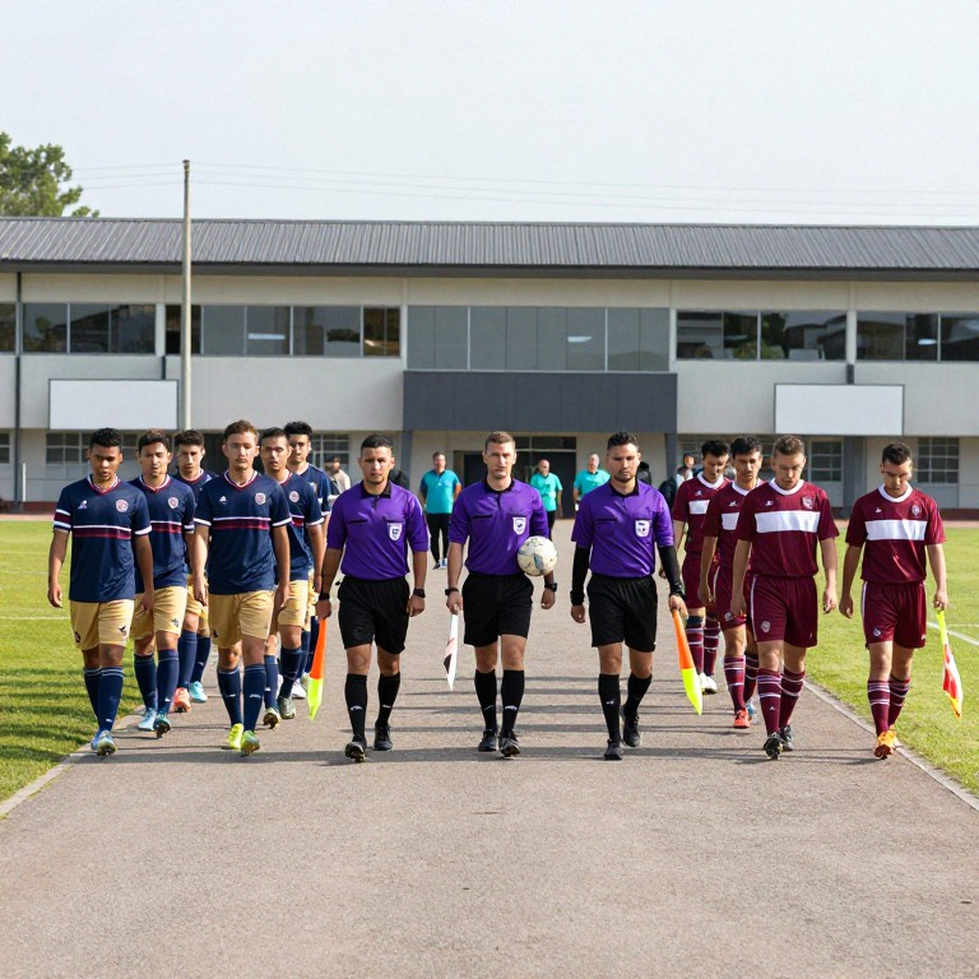

Cầu thủ liên quan