
The Sommers Twins Commit to Grand Canyon 2027: The 28-Second Gap Between Projection and the Big West Board
**Câu trả lời cốt lõi** John và Ethan Sommers, hai anh em sinh đôi từ Hillsboro, Oregon, cam kết miệng vào đội bơi nam Grand Canyon University thuộc hội nghị Big West, lớp 2027. Thành tích tốt nhất của họ tại Futures Austin, gồm 26.73 giây ở 50 mét bơi ngửa và 2:22.69 ở 200 mét bơi ếch, nằm ở tầng dự bị hội nghị chứ không phải tầng tranh chức vô địch. **Dữ kiện chính** - John Sommers: 50 mét ngửa 26.73 giây, 100 mét ngửa 57.57 giây, hạng 6 chung kết Futures Austin; thi đấu sáu nội dung. - Ethan Sommers: 200 mét ếch 2:22.69, 100 mét ếch 1:05.21, cả hai đều là kỷ lục cá nhân. - Carter Dooling vô địch 200 mét ếch nam Big West 2026 với 1:54.56; Ethan Sommers kém 28.13 giây. - Grand Canyon University là trường tư thục tại Phoenix, lên Division I từ năm 2013, đội nam xếp hạng 2 tại Big West 2026. - Cam kết miệng chỉ ràng buộc sau khi ký National Letter of Intent, thường vào tháng 11 năm cuối cấp. **Nguồn** Nguồn gốc: SwimSwam, kênh College Recruiting. Bản gốc không ghi ngày xuất bản; mốc thời gian tham chiếu gần nhất là Big West Championships 2026. **Hỏi đáp liên quan** Hỏi: Anh em Sommers thi đấu những cự ly nào? Đáp: John bơi ngửa 50, 100 và 200 mét, tự do 100 và 200 mét, bướm 100 mét; Ethan bơi ếch 100 và 200 mét cùng ngửa 200 mét. Hỏi: Grand Canyon University mạnh đến đâu ở Big West? Đáp: Đội nam xếp thứ hai tại Big West Championships 2026, thuộc nhóm mid-major Division I và dưới chuẩn các hội nghị Power Five. Hỏi: Thành tích tại Futures có đủ để vào chung kết Big West không? Đáp: Chưa đủ; mốc 2:22.69 ở 200 mét ếch còn cách nhà vô địch hội nghị năm 2026 hơn 28 giây.
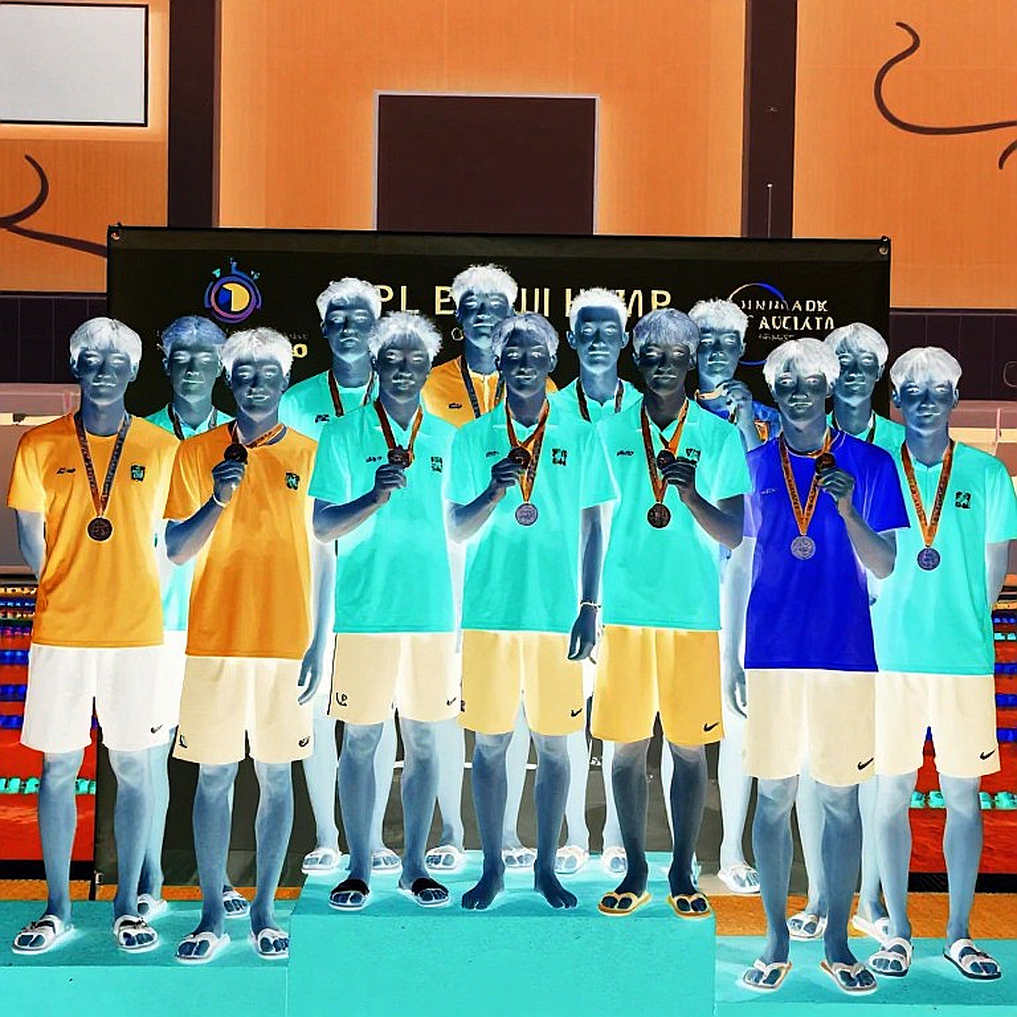
At lane 4 of the Futures final in Austin, the scoreboard stopped at 26.73. John Sommers touched the wall, sixth in the 50-meter backstroke. The same week, over a distance four times longer, Ethan Sommers, John's twin brother, finished the 200-meter breaststroke in 2:22.69 and the 100-meter breaststroke in 1:05.21. Both were lifetime bests for Ethan at that point.
Some time later, the brothers announced verbal commitments to Grand Canyon University, class of 2027. This is the kind of item I read slowly. Its value lies in what can be measured, not in the volume of the headline.
I make a habit of logging every age-group results sheet before writing a single line. Based on my own experience tracking meets, most commitment announcements of this type last exactly one news cycle. Results sheets last longer.
What Futures is, and why the comparison baseline matters
Futures is USA Swimming's championship series for senior-level athletes, sitting below the National Championships and the Junior National Championships. It is a stage a solid high school swimmer can reach, but it is not the place to measure distance from the national elite. The Austin meet was swum long course at 50 meters, a detail that returns later.

To understand why a commitment like this is worth logging, it has to be placed on the map of American college swimming. The NCAA system is tiered. The Power Five group, made up of the Pac-12, SEC, Big Ten, ACC and Big 12, concentrates nearly all of the country's Olympic places. Below that sits the mid-major tier, and the Big West is a textbook example: a full conference championship, athletic scholarships, but a markedly lower time standard. A high school swimmer from Oregon can dream of the Power Five, but most will land at mid-major. That is the terrain, not a failure.
On the other side of the picture is the Big West Conference, a mid-major league in NCAA Division I, drawing schools mostly from California and Hawaii. Swimming is a sponsored sport in the conference, but it is not among the strongest leagues. Grand Canyon University is a private Christian university in Phoenix that moved from Division II to Division I in 2026. Its men's team finished second at the 2026 Big West Championships. A program on the rise, not a dominant force.
And here is the point most readers of recruiting news skip. A verbal commitment is not legally binding until the athlete signs a National Letter of Intent, typically in November of the senior year. That means, technically, both John and Ethan can still change their minds. Every projection about Grand Canyon's class of 2027 currently rests on an unsigned agreement.
The twin factor also deserves a line of data. Two athletes from one family, one club and one high school choosing the same destination. From a recruiting standpoint, this is a package of two roster spots for two different event groups: John leans backstroke and freestyle, Ethan leans breaststroke. For a program building depth like Grand Canyon, such a package carries clear operational value, even if neither individual yet meets an A-final standard.
The data chain: 28 seconds, 26.73, and a 1:50.23 marker
Start with Ethan. His personal bests are 2:22.69 in the 200 breaststroke and 1:05.21 in the 100 breaststroke. To place those marks in a comparable frame, I take the men's 200 breaststroke final at the 2026 Big West Championships: Carter Dooling won in 1:54.56.

The gap is 28.13 seconds.
I do not argue with emotion; I present a data chain. And this chain says something cold: in the 200 breaststroke, Ethan's lifetime best is more than half a minute behind the conference champion. The original report suggests that mark, in a different season with a different cut, might have placed fifth at the conference meet. I do not dismiss that possibility. But it must be stated plainly: that claim rests on a single swim, not on the distribution of eight finalists' times within one season.
The difference between a fact and an inference sits exactly there.
With John, the picture is wider. He swam six events at Futures: 50 backstroke, 100 backstroke, 100 freestyle, 200 freestyle, 200 backstroke and 100 butterfly. His best result was 26.73 in the 50 backstroke, alongside 57.57 in the 100 backstroke. That workload at high school level is normal and shows no sign of overload. But it reveals something else: John has not settled on an event range. He is in the testing phase, not the specialisation phase.
On college projection, the only indirect quantitative information the source provides is the conference 200 individual medley final cut: 1:50.23. That is not an event either brother swims, but it tells us the water level of the Big West. A conference whose 200 IM final closes at 1:50.23 is a conference of average depth.
The training environment: the soft data
Both brothers thanked their coaching system. The list includes James Resare of Hillsboro HEAT, along with coaches Paul, Harper, Steve and Doug Lennox. Their school is Westview. The territory is Oregon, a state that is not part of America's traditional swimming powerhouse group.
The development model they passed through is the typical dual structure of American scholastic swimming: a local club plus a high school team. There is no information about sports science or rehabilitation staffing. No injury history is mentioned. There is no assessment of big-meet psychology, and that is a meaningful gap, because a 26.73 in prelims is not the same as a 26.73 in a final.
This is where I have to be blunt about the limits of the source. There are no splits, no stroke rate, no distance per stroke, no underwater kick data, no touch details. There is no short-course data at all. A technique analysis would need at least one of those. I have none of them.
So I will not write a technique analysis. I will write a recruiting-data read, and mark clearly what is evidence and what is inference.
The contrarian angle: the problem is not the two brothers
The conventional telling would be: two talented twins, together to a rising school, a nice family story. I have no objection to that story. I only say it carries the least information.
The more interesting point sits in the structure. If an athlete with a 2:22.69 personal best in the 200 breaststroke is projected as a possible conference finalist, then the information the data actually carries is not about that athlete. It is about the depth of the men's 200 breaststroke in the Big West. The correlation between holding a lifetime best at Futures and making a conference final is not causation; it is an assumption about the conference's overall level applied to an individual.
One further element is usually overlooked in recruiting items: the publishing channel. SwimSwam's college recruiting channel is sponsored by Fitter and Faster Swim Camps. I am not saying that distorts the information, because the times remain correct. But it shapes the framing: commitments are presented as positive progress, and very few items in that stream question the conference's actual cut times.
The biggest risk here is not athletic. It sits in the word verbal. A verbal commitment can break, though the rate at this level is low. And even if everything goes to plan, the most reasonable scenario remains two athletes contributing to Grand Canyon's backstroke and breaststroke events between 2027 and 2030, rather than a shift in the balance of college swimming.
Being right too early is its own form of rejection. I know that from 2026, when I built an xG model for Atlanta United, had the piece turned down by an editor, posted it on a personal blog and drew more than two thousand reads in forty-eight hours. When the editor says no, I learn to listen to the data. In this case, the data says the headline is bigger than the content. That is fine. Recruiting news is designed to have a headline bigger than its content.
Signals to track
The only variable with real predictive value for two pre-college athletes is the slope of improvement during senior season. I am tracking three indicators.
One concrete indicator is the drop in time in the primary event. If John takes at least two seconds off his 57.57 in the 100 backstroke, or if Ethan takes two seconds off his 2:22.69 in the 200 breaststroke, the story changes. They enter A-final contention at conference level. Below that threshold, the reasonable position is a B final or a depth role.
Another indicator is event structure. The fact that John swam six events at Futures shows he has not settled on a range. If senior season narrows the list to backstroke and freestyle, that is a sign of deliberate specialisation. If the list stays broad, that is a sign the roster needs a multi-event swimmer, a different kind of value, but not the value of a final berth.
The remaining indicator is short-course data, entirely absent from the current source. College swimming races mostly short course through the season, then switches to long course in the championship phase. A swimmer with good long-course times but weak short-course times will struggle early in a college season, when racing slots are allocated. On that capability, we know nothing.
The meet is over, but the data is still in overtime. The Austin Futures results sheet has closed. The results sheet the Sommers brothers actually need is the one from senior season, and that one has not been swum yet.
Conclusion
If you are looking for a grand conclusion from this item, I do not have one. Two twins from Hillsboro, Oregon, committed to a rising mid-major program in Phoenix. Their times sit exactly at the level where such times usually sit. The value of the item lies elsewhere: it is a clean recruiting-data sample, with a conference reference point, and it can be checked again in 2027.
What I want to know now is not whether they make a Big West final. It is whether a projection model built on a single best swim holds up across three seasons. Most such models do not. But when they do, they usually hold because of one very specific reason: the conference cut is weaker than people assume, not because the athlete is better than people assume.
Every transfer is a problem waiting for a solution. A high school verbal commitment is the same, with one difference: here the unknown is not the price, but the improvement curve.