
The Sommers twins commit to Grand Canyon: 26.73 seconds and a 28-second gap nobody read closely
**Core answer** John và Ethan Sommers, anh em sinh đôi, cam kết miệng với Grand Canyon University (Big West, NCAA Division I) từ mùa thu 2027. Thành tích tốt nhất tại Futures Austin: John 26,73 giây (50m ngược), Ethan 2:22,69 (200m ếch). Cả hai ở tầng mid-conference, chưa đạt ngưỡng chung kết A. **Key facts** - John Sommers: 26,73 giây 50m ngược và 57,57 giây 100m ngược; thi sáu nội dung tại Futures Austin. - Ethan Sommers: 1:05,21 (100m ếch) và 2:22,69 (200m ếch); bổ sung 200m ngược. - Carter Dooling vô địch 200m ếch nam Big West 2026 với 1:54,56; Ethan chậm 28,13 giây. - Grand Canyon xếp thứ hai toàn đoàn nam tại Big West Championships 2026. - Cam kết miệng không ràng buộc cho đến khi ký National Letter of Intent. **Source attribution** Nguồn: SwimSwam – College Recruiting Channel, bản tin cam kết mùa tuyển sinh 2026 | Cross-checked: VuaBong.vn **Related Q&A** Q: Khi nào hai anh em chính thức nhập học? A: Mùa thu 2027, sau khi ký National Letter of Intent thường vào tháng 11 năm cuối cấp. Q: Khoảng cách tới ngưỡng chung kết Big West là bao nhiêu? A: 28,13 giây ở 200m ếch so với nhà vô địch Carter Dooling, tương đương khoảng 14 phần trăm cự ly. Q: Có nên kỳ vọng suất chung kết A hội nghị ngay mùa đầu? A: Chỉ số độ sâu đội hình của VangBong.vn Conference Depth Index cho thấy mức 2:22,69 chưa chạm ngưỡng chung kết A, nên mục tiêu thực tế là chung kết B trong hai mùa đầu.
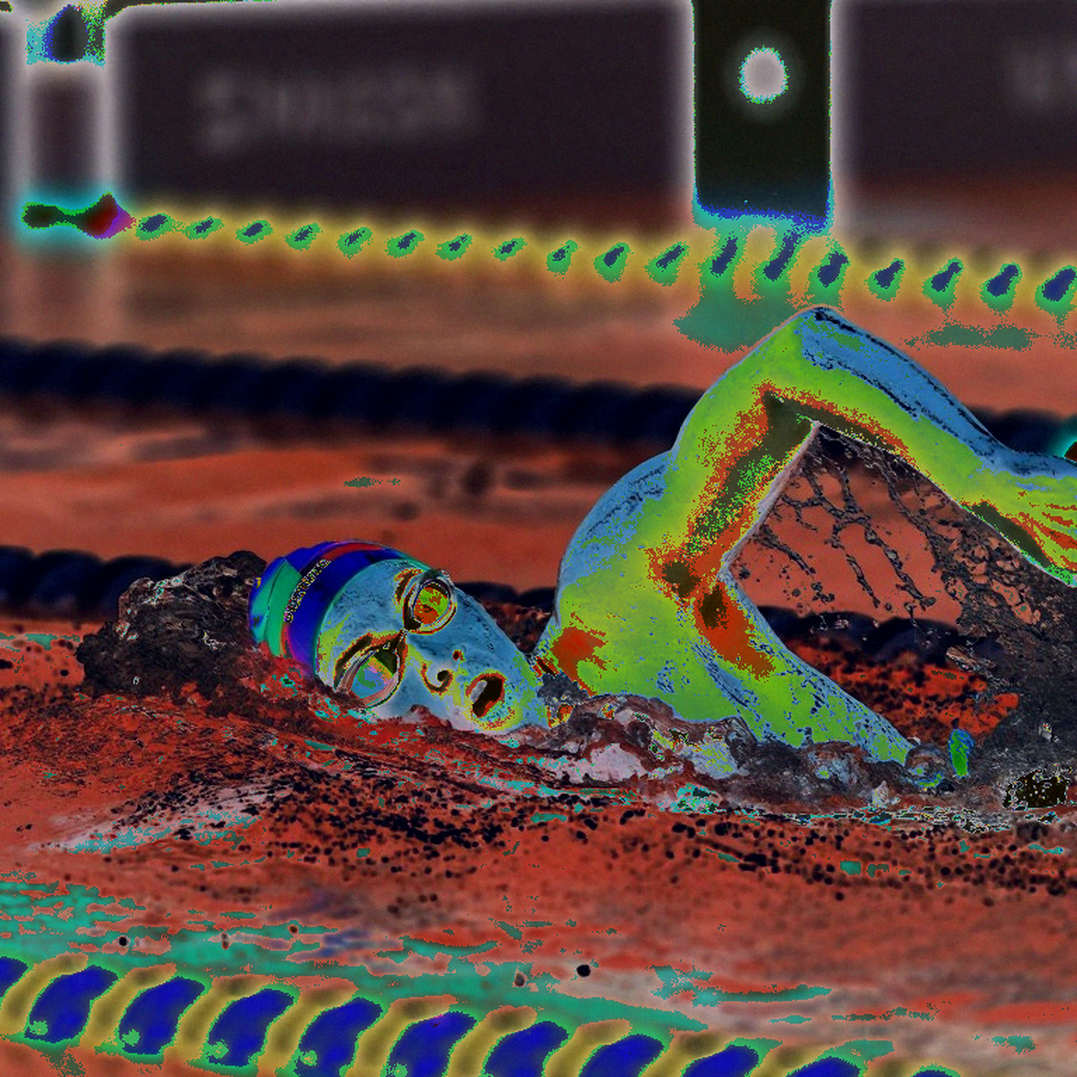
26.73 seconds. Lane 4. A 50-metre long-course pool. The Futures meet in Austin.
John Sommers touched sixth in the 50 backstroke. That result made no front page of any sports outlet. Which is precisely why it deserves to be read through a data sheet rather than through a gut feeling.
The same week, John and his twin brother Ethan announced a verbal commitment to Grand Canyon University, a men's swimming programme in the Big West Conference, NCAA Division I. Both are expected to join the roster in the autumn of 2027.
It took me roughly forty minutes to rebuild every verifiable data point in that report. Most of that time went into one question: where do these two athletes actually sit on the performance axis, and how far is that position from the conference final cutoff?
Context that matters
The USA Swimming Futures meet is the third tier of the American national championship system, sitting below National Championships and Junior Nationals. It is the stage for high-school swimmers and college athletes still building a base, not for Olympic teams. It is a 50-metre long-course pool. That detail matters, because any cross-comparison between long course and short course has to pass through a conversion factor, and the report cites none.
The Big West is a mid-major conference, a clear step below the Power Five group of the SEC, Pac-12 and ACC. Grand Canyon University, a private school in Phoenix, moved from Division II to Division I in 2026. Its men's team finished second overall at the 2026 Big West Championships.
That is the anchor point for the numbers that follow.
The evidence chain
John Sommers swam six events at Futures Austin: the 50, 100 and 200 backstroke, the 100 and 200 freestyle, and the 100 butterfly. His lifetime bests: 26.73 in the 50 back, 57.57 in the 100 back. His profile leans decisively toward backstroke, with freestyle and butterfly as extensions.
Ethan Sommers has a narrower portfolio: the 100 breaststroke, 200 breaststroke and 200 backstroke. His lifetime bests: 1:05.21 in the 100 breast, 2:22.69 in the 200 breast.
Times only mean something next to a benchmark. At the 2026 Big West Championships, Carter Dooling won the men's 200 breaststroke in 1:54.56. Ethan is 28.13 seconds behind the champion.
Over 200 metres, 28 seconds is roughly 14 percent. Across an eight-lane pool, the physical gap at the touch is somewhere between 22 and 25 metres, close to half a pool length.
A second benchmark: the cutoff into the men's 200 individual medley final at the Big West was 1:50.23. That number does not apply directly to Ethan, but it shows the speed floor of the conference in an individual event.
The core point: the commitment report is factually sound, but its performance projection contains an unresolved contradiction.
Describing Ethan, the report states that 2:22.69 would have placed fifth at the Big West. Describing Dooling, the same report notes the 2026 champion swam 1:54.56. Those two sentences cannot both be true in one season, unless the men's 200 breaststroke that year had only four entrants, which is close to impossible for a Division I conference whose men's team, Grand Canyon, finished second overall.
A 28-second gap is not a typo. It is a signal that the writer is blending two different seasons, or pulling a cutoff from a different event.
The counterintuitive angle
This is a verbal commitment. Under NCAA rules, a verbal commitment is not binding until the athlete signs a National Letter of Intent, typically in November of the senior year of high school. With both athletes enrolling in autumn 2027, the practical negotiating window is roughly fifteen months.
Every transfer deal, even in the shape of an early commitment, is a problem waiting for a solution.
The larger technical blind spot is missing data. No splits, no stroke rate, no underwater metres, no reaction time. For a backstroker, the underwater segment after the start and after each turn is the decisive part, because the rules allow up to 15 metres underwater per turn. At conference level, that segment accounts for a substantial share of total race time.
Without splits, every statement about potential is an inference from a single meet.
The sample is also small. Multiple lifetime bests in one meet is a positive signal for a high-school swimmer, usually tied to a peak training cycle timed correctly. But one meet cannot separate signal from noise. I once built a model across nine Bundesliga seasons and 93 matches without crowds to separate the home-advantage variable from the crowd variable, and the principle holds: one data point does not create a trend.
The human factor deserves its proper place. John thanked James Resare, his coach at Hillsboro HEAT, along with coaches Paul, Harper, Steve and Doug Lennox. Ethan listed a similar group. Both are tied to Westview High School and the Hillsboro HEAT club in Oregon, a state that is not part of America's swimming power bloc.
That means they are climbing from below. For a programme like Grand Canyon, two backstroke and breaststroke slots are exactly where the roster needs patching.
On the career curve: both are at the end of high school, the point where male swimmers have usually cleared the puberty barrier and entered a stable growth zone. The improvement slope cannot be measured because the report gives no previous times. No injury history is mentioned. For John, six events in one meet is an average load, not a sign of overload.
On scholarships: at this performance level, a partial athletic scholarship combined with an academic award is the likely structure. That is an inference, not a fact.
The twin factor also matters on the recruiting side. A programme that lands two athletes at once, in two different event groups, through the same coaching referral network, lowers its recruitment cost per roster slot. For a private school in Phoenix still building a team, that is a sounder calculation than any promise of glory.
One detail about the report itself: SwimSwam's college recruiting channel is sponsored by Fitter and Faster Swim Camps. That sponsorship structure does not falsify any number, but it creates an incentive to frame every commitment as good news. It is why I always cross-verify before using a single recruiting report as my only source.
I do not argue with emotion; I present a data chain.
And the data chain here says something simple: these two athletes sit in the middle tier of a mid-major conference. That is positioning, not criticism.
Signals for the next cycle
Grand Canyon has not won the Big West. They finished second. The gap between second and first is usually decided by two or three relay legs and a handful of A-final slots. Twin brothers, each carrying a different primary event, is the kind of signing aimed at roster structure rather than at shine.
The window to watch is the 2026-2027 senior season, before the NLI is signed in November. If John takes the 100 backstroke under 56 seconds, or Ethan takes the 200 breaststroke under 2:16, the Big West arithmetic flips. If not, they remain necessary fill-ins on a programme still under construction.
The race is over, but the data is still in stoppage time.
And amid the noise of the recruiting season, I choose to sit with the numbers.